
Component inspection is the final line of defense in manufacturing, ensuring only flawless parts reach production or end-users. Yet low-resolution displays and clunky interfaces hinder this critical process: tiny defects go unnoticed, operators strain to identify anomalies, and slow touch responses delay inspections. These inefficiencies lead to defective products, costly recalls, and compromised quality standards—especially when inspecting microcomponents, precision parts, or intricate assemblies.
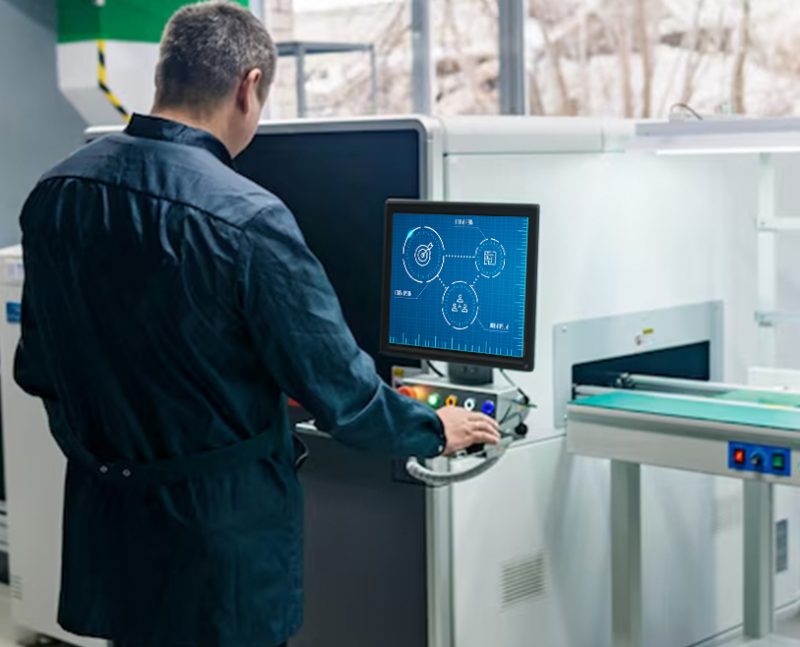
High-Res Industrial Touch Displays transform component inspection by delivering unmatched clarity, responsiveness, and durability tailored for manufacturing environments. With ultra-high resolutions (4K/UHD), intuitive touch controls, and industrial-grade build, these displays let operators zoom in on minute details, navigate inspection tools seamlessly, and capture accurate data in real time. They integrate with vision systems, measurement tools, and quality control software, making them essential for industries prioritizing precision—from electronics and automotive to medical devices and aerospace. This article breaks down their core features, benefits, applications, and FAQs to show how they elevate inspection workflows.
Core Features of High-Res Industrial Touch Displays
1. Ultra-High Resolution & Image Clarity
Unrivaled visual precision to detect the smallest defects:
4K/UHD resolution (3840×2160): Delivers crisp, pixel-perfect imagery, revealing micro-defects (scratches, cracks, misalignments) as small as 0.01mm.
High pixel density (PPI): 150+ PPI ensures sharp details without blurring, even when zooming in on tiny components.
Wide color gamut & contrast: 100% sRGB coverage and 1000:1 contrast ratio distinguish subtle color variations and surface irregularities.
Anti-glare & high-brightness display: 1200 nits brightness with anti-reflective coating ensures visibility under factory lighting or harsh conditions.
This clarity eliminates missed defects, the top cause of post-inspection failures.
2. Intuitive Touch Control & Inspection Tool Integration
Seamless interaction with inspection equipment to streamline workflows:
10-point multi-touch support: Enables precise zooming, panning, and marking of defects directly on the display.
Fast touch response (<6ms): Eliminates lag when adjusting vision systems, measurement tools, or annotation features.
Compatibility with inspection hardware: Works with vision cameras, microscopes, and measurement devices via Ethernet/IP, USB-C, and HDMI.
Customizable annotation tools: Add markers, notes, or measurements to defect areas for documentation and reporting.
This integration lets operators complete inspections faster and more accurately.
3. Industrial-Grade Durability & Environmental Resistance
Built to withstand the rigors of manufacturing inspection environments:
IP65 front-panel protection: Sealed against dust, debris, and liquid spills (e.g., cleaning agents, lubricants).
9H tempered glass surface: Resists scratches from tools, components, and accidental impacts, ensuring long-term reliability.
Wide temperature tolerance: Operates reliably from -20°C to 60°C (-4°F to 140°F), fitting controlled inspection labs and factory floors.
Vibration resistance: Reinforced internals handle vibrations from nearby machinery, avoiding display flicker or touch disruptions.
This durability ensures 24/7 operation with minimal maintenance in high-throughput facilities.
4. Real-Time Data Sync & Quality Control Integration
Empowers quality teams to track, document, and analyze inspection results:
Live inspection dashboards: Displays real-time metrics (defect count, pass/fail rates, inspection speed) at a glance.
Seamless QC software integration: Syncs with quality management systems (QMS) like SAP or Siemens Opcenter for automated data logging.
Defect categorization tools: Classify defects (cosmetic, functional, structural) directly on the display for trend analysis.
Remote access capability: Lets supervisors review inspections, approve reports, or troubleshoot from off-site control rooms.
This visibility ensures proactive quality management and faster decision-making.
5. Operator-Friendly Design & Safety Compliance
Optimized for long inspection shifts while prioritizing safety:
Ergonomic mounting options: Supports panel, arm, or wall mounting to reduce operator fatigue during extended use.
Low blue light mode: Minimizes eye strain for operators working long hours on detailed inspections.
Multi-language support: Offers English, Chinese, Japanese, and German to cater to global manufacturing teams.
Lockout/tagout (LOTO) functionality: Enables safe shutdown during maintenance to prevent accidents.
Key Benefits of High-Res Industrial Touch Displays for Component Inspection
1. Reduce Defect Rates & Prevent Recalls
The most critical benefit is eliminating missed defects and costly errors:
Lower defect escape rates by 40–50%: Ultra-high resolution detects micro-defects that standard displays miss.
Prevent product recalls: Catching defects during inspection avoids costly post-shipment failures and brand damage.
Improve defect classification accuracy: Clear imagery ensures consistent categorization for better trend analysis.
Minimize rework costs: Early defect detection reduces the need to reprocess or scrap entire batches.
2. Boost Inspection Efficiency & Productivity
Streamlines workflows to handle higher volumes without compromising quality:
Cut inspection time by 30%: Intuitive touch controls and clear imagery speed up defect identification.
Simplify training: User-friendly interface reduces onboarding time for new inspectors, avoiding production delays.
Automate documentation: Sync with QMS to eliminate manual data entry, freeing operators to focus on inspections.
Enable parallel inspections: Split-screen functionality lets operators compare components or reference standards side-by-side.
3. Ensure Regulatory Compliance & Traceability
Meets strict industry standards for quality documentation:
Complies with global regulations: Aligns with ISO 9001, IATF 16949 (automotive), and FDA (medical) standards.
Enhances audit readiness: Automated data logging and defect reports support regulatory audits and customer requirements.
Full batch traceability: Links inspections to production batches for complete visibility across the supply chain.
Consistent inspection criteria: Standardized displays ensure uniform inspection standards across all operators.
4. Extend Equipment Lifespan & Reduce Operational Costs
Protects inspection tools and lowers long-term expenses:
Preserves vision system accuracy: High-res displays maximize the performance of expensive inspection cameras and microscopes.
Long display lifespan: Industrial-grade components last 6–8 years, outperforming consumer-grade screens.
Cut maintenance costs: Durable design and remote monitoring reduce on-site repairs and replacements.
Optimize resource allocation: Data insights help reallocate inspectors to high-risk areas, improving overall efficiency.
Practical Applications for Component Inspection Scenarios
1. Electronics Component Inspection
For microchips, PCBs, and semiconductor parts:
Detect micro-scratches, solder defects, and component misalignments with 4K resolution.
Inspect tiny SMT components (01005 size) and verify wire bonding quality.
Sync with semiconductor vision systems for automated defect detection and documentation.
2. Automotive Component Inspection
For engine parts, sensors, and automotive electronics:
Inspect precision machined components (gears, valves) for surface defects and dimensional accuracy.
Verify cosmetic quality of interior components (dashboards, trim) with true-to-life color reproduction.
Meet IATF 16949 standards with detailed inspection logs and traceability.
3. Medical Device Component Inspection
For surgical tools, implants, and medical electronics:
Ensure sterile and defect-free parts to comply with FDA and CE regulations.
Inspect micro-scale medical components (catheter tips, pacemaker parts) with ultra-high clarity.
Document every inspection step for full regulatory traceability and quality audits.
4. Aerospace & Defense Component Inspection
For mission-critical aerospace parts and defense electronics:
Detect minute cracks or material flaws in high-strength alloys and composites.
Inspect complex assemblies (avionics, radar components) with precise touch controls and split-screen viewing.
Meet AS9100 standards with rigorous data logging and defect tracking.
FAQs About High-Res Industrial Touch Displays
Q1: Will these displays integrate with my existing inspection equipment and QMS?
A1: Yes! They support standard interfaces (HDMI, USB-C, Ethernet/IP) and integrate with leading vision systems and QMS platforms. Our team verifies compatibility for seamless setup.
Q2: What resolution is ideal for micro-component inspection?
A2: 4K/UHD (3840×2160) is recommended for most applications, as it reveals defects as small as 0.01mm. We also offer 8K options for ultra-micro components (e.g., semiconductor wafers).
Q3: Can operators use the displays with inspection gloves?
A3: Absolutely. The touch screens are optimized for use with nitrile, latex, or cut-resistant gloves, ensuring full functionality without compromising precision.
Q4: How do the displays perform in bright factory environments?
A4: With 1200 nits brightness and anti-glare coating, they maintain clarity even in direct factory lighting or outdoor inspection areas.
Q5: What warranty and support are included?
A5: All models include a 3-year warranty covering hardware defects, touch responsiveness, and image quality. Extended 5-year warranties are available, with 24/7 technical support for inspection facilities.
Conclusion
High-Res Industrial Touch Displays redefine component inspection by merging ultra-clear visuals, intuitive controls, and industrial durability to drive quality, efficiency, and compliance. They eliminate missed defects, streamline workflows, and ensure adherence to strict industry standards—critical for electronics, automotive, medical, and aerospace manufacturing. Whether you’re inspecting microchips, precision machined parts, or mission-critical components, these displays are the backbone of a reliable quality control process.
Ready to elevate your component inspection with high-resolution clarity and precision? Fill out the form on our website to connect with our industrial display experts. We’ll assess your inspection needs, verify equipment compatibility, and recommend a customized high-res touch display solution. Let’s build a more accurate, efficient quality control process—start today!