
Cleanrooms are critical for industries requiring ultra-pure environments, from semiconductor manufacturing and pharmaceutical production to medical device assembly. Even minute dust particles can contaminate products, ruin batches, and violate strict regulatory standards. Traditional industrial HMI screens fail here: their porous designs trap dust, gaps allow particle ingress, and hard-to-clean surfaces harbor contaminants. These flaws compromise cleanroom integrity, leading to costly rework, regulatory penalties, and production delays.Dust-Free Industrial HMI Screens are engineered to solve these challenges, designed specifically for the rigors of ISO-classified cleanrooms.
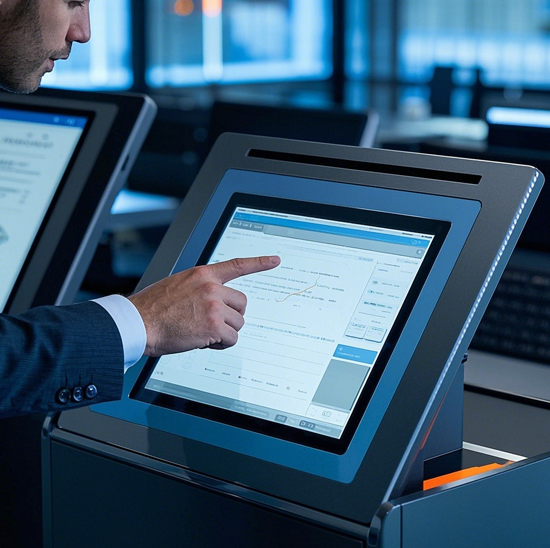
With hermetically sealed enclosures, smooth non-porous surfaces, and sterile-compatible materials, these screens prevent dust accumulation and particle release. They deliver precise touch control, seamless equipment integration, and easy sanitization—all while adhering to the strictest cleanroom protocols. Whether in ISO 5 (Class 100) semiconductor labs or ISO 7 (Class 10,000) pharmaceutical facilities, these HMI screens maintain purity without sacrificing performance. This article breaks down their core features, benefits, applications, and FAQs to show how they elevate cleanroom operations.
Core Features of Dust-Free Industrial HMI Screens
1. Hermetic Sealing & Dust-Proof Design
Eliminates particle ingress and accumulation, the top cleanroom concern:
IP67/IP68-rated sealing: Fully enclosed design blocks dust, debris, and liquid droplets from entering the screen housing.
Seamless bezel construction: No gaps or crevices where dust can collect, ensuring a smooth, easy-to-clean surface.
Non-porous materials: Medical-grade glass and corrosion-resistant polymers prevent particle absorption and release.
Gasket-free integration: Specialized bonding techniques eliminate gasket degradation, which can shed particles over time.
This design ensures the screen meets ISO 14644-1 cleanroom standards, preventing contamination risks.
2. Sterile-Compatible & Easy Sanitization
Supports frequent cleaning without damaging performance or releasing particles:
Chemical-resistant surfaces: Withstands harsh cleanroom sanitizers (isopropyl alcohol, hydrogen peroxide, bleach solutions).
Fast-drying materials: Minimizes moisture retention, reducing the risk of microbial growth and water spots.
Smooth touch interface: No texture or grooves, so sanitizers can reach all areas and remove contaminants completely.
Low-particulate emission: Materials are tested to ensure minimal outgassing and particle release during cleaning or operation.
This feature ensures compliance with GMP (Good Manufacturing Practices) and sterile processing requirements.
3. Precision Touch Control & Cleanroom Equipment Integration
Seamless synergy with cleanroom machinery while maintaining purity:
10-point multi-touch responsiveness: Enables precise taps, swipes, and gestures to control automated equipment, process parameters, and monitoring systems.
Fast response time (<6ms): Eliminates lag during critical operations, ensuring accurate control of sensitive cleanroom processes.
Standard industrial protocol support: Works with cleanroom equipment (robots, incubators, inspection tools) via Ethernet/IP, Modbus TCP, and USB-C.
Customizable sterile workflows: Tailor interfaces to cleanroom processes (e.g., batch tracking, recipe management, equipment calibration).
This precision ensures operators can control processes without compromising cleanroom integrity.
4. Industrial-Grade Durability & Environmental Stability
Built to perform in controlled cleanroom conditions:
Wide temperature tolerance: Operates reliably from 10°C to 50°C (50°F to 122°F), fitting the stable climates of cleanrooms.
Low-vibration design: Reinforced internals minimize particle generation from screen operation, even during extended use.
Anti-glare high-brightness display: 1,000 nits brightness with anti-reflective coating ensures visibility under cleanroom lighting without glare.
Static-dissipative surface: Prevents ESD (electrostatic discharge) while avoiding particle attraction, critical for semiconductor cleanrooms.
This durability guarantees 24/7 operation with minimal maintenance, even in high-throughput cleanrooms.
5. Regulatory Compliance & Data Integrity
Supports cleanroom documentation and regulatory requirements:
Audit-ready data logging: Records touch interactions, process adjustments, and cleaning cycles for traceability.
Electronic signature integration: Enables secure operator sign-offs for batch processes, aligning with FDA 21 CFR Part 11.
Remote monitoring & updates: Lets managers adjust settings or push software updates without entering the cleanroom, reducing contamination risks.
Compliance labeling: Meets ISO 14644-1, GMP, and FDA standards, with documentation for regulatory audits.
This feature simplifies compliance and ensures cleanroom operations are fully traceable.
Key Benefits of Dust-Free Industrial HMI Screens for Cleanrooms
1. Maintain Cleanroom Purity & Reduce Contamination
Protects products and processes from dust-related flaws:
Eliminate particle-related defects: Hermetic sealing prevents dust from entering equipment or contaminating batches.
Avoid batch rejects: Maintains ISO classification, ensuring products meet purity standards and pass inspections.
Reduce rework costs: Fewer contaminated batches mean less time and resources spent on reprocessing.
Prevent cross-contamination: Easy sanitization ensures the screen doesn’t transfer contaminants between processes.
2. Ensure Regulatory Compliance & Avoid Penalties
Simplifies adherence to strict cleanroom standards:
Meet global regulations: Aligns with ISO 14644-1, GMP, FDA, and IEC standards, avoiding costly non-compliance fines.
Streamline audits: Automated data logging and compliance documentation reduce audit preparation time.
Support sterile processing: Ideal for pharmaceutical and medical device facilities requiring FDA 21 CFR Part 11 compliance.
Maintain traceability: Detailed logs link operator actions to batch outcomes, critical for regulatory accountability.
3. Boost Cleanroom Efficiency & Productivity
Streamlines workflows without compromising purity:
Cut cleaning time by 40%: Smooth, non-porous surfaces let staff sanitize screens quickly between shifts.
Reduce cleanroom access: Remote monitoring and updates minimize the number of personnel entering the cleanroom.
Simplify operator training: Intuitive interfaces reduce onboarding time for new staff, avoiding production delays.
Minimize downtime: Durable design and remote troubleshooting reduce maintenance-related disruptions.
4. Extend Equipment Lifespan & Lower Costs
Protects both the HMI screen and cleanroom machinery:
Prevent equipment damage: Dust-proof sealing keeps contaminants out of screen internals, extending lifespan to 6–8 years.
Reduce maintenance costs: Chemical-resistant surfaces avoid damage from frequent sanitization, cutting replacement expenses.
Optimize resource allocation: Less time spent cleaning and maintaining screens lets staff focus on core processes.
Future-proof operations: Compatible with new cleanroom equipment and evolving regulatory standards.
Practical Applications for Cleanroom Scenarios
1. Semiconductor & Microelectronics Cleanrooms
For ISO 5–ISO 6 (Class 100–Class 1,000) facilities manufacturing microchips and wafers:
Prevent particle contamination of ultra-sensitive semiconductor components during fabrication.
Support ESD protection with static-dissipative surfaces, avoiding damage to microelectronics.
Integrate with wafer processing equipment for precise control of deposition, etching, and inspection processes.
2. Pharmaceutical & Biotech Cleanrooms
For ISO 7–ISO 8 (Class 10,000–Class 100,000) facilities producing drugs and biologics:
Withstand frequent sanitization with pharmaceutical-grade cleaners, maintaining sterile conditions.
Enable electronic batch records and operator sign-offs, complying with FDA 21 CFR Part 11.
Integrate with bioreactors and filling equipment for precise control of formulation and packaging processes.
3. Medical Device Cleanrooms
For facilities assembling sterile medical devices (surgical tools, implants, diagnostic equipment):
Ensure zero particle release to comply with FDA and CE sterile device regulations.
Support cleanroom workflow customization (e.g., tracking implant serial numbers, sterilization cycles).
Withstand harsh sanitizers used to maintain Class 100–Class 10,000 environments.
4. Food & Beverage Precision Processing
For cleanrooms producing high-purity food products (nutraceuticals, sterile beverages):
Prevent microbial and dust contamination of food ingredients and finished products.
Support easy sanitization between production runs, avoiding cross-contamination of food batches.
Integrate with packaging equipment for precise control of filling and sealing processes.
FAQs About Dust-Free Industrial HMI Screens
Q1: Do these screens meet specific cleanroom ISO classifications?
A1: Yes! They are engineered to comply with ISO 5 (Class 100) to ISO 8 (Class 100,000) standards, with IP67/IP68 sealing to prevent particle ingress and release.
Q2: Can the screens withstand daily sanitization with cleanroom chemicals?
A2: Absolutely. Their surfaces are resistant to all common cleanroom sanitizers, including isopropyl alcohol, hydrogen peroxide, and bleach, without degradation.
Q3: Will the screens integrate with my existing cleanroom equipment?
A3: Yes. They support standard industrial protocols (Ethernet/IP, Modbus TCP) and are compatible with leading cleanroom machinery brands. Our team verifies integration for seamless setup.
Q4: How do the screens prevent static buildup in ESD-sensitive cleanrooms?
A4: They feature static-dissipative surfaces (surface resistance 10⁶–10¹¹ Ω/sq) that channel static away, avoiding particle attraction and ESD damage to components.
Q5: What warranty and support are included for cleanroom applications?
All models include a 3-year warranty covering dust-proof sealing, chemical resistance, and performance. Extended 5-year warranties are available, with 24/7 technical support for cleanroom facilities.
Conclusion
Dust-Free Industrial HMI Screens are a critical investment for cleanroom operations, merging hermetic dust-proof design, sterile compatibility, and precision performance to maintain purity, ensure compliance, and boost efficiency. They eliminate contamination risks, simplify regulatory adherence, and streamline workflows—all while withstanding the rigorous cleaning and operational demands of ISO-classified environments. Whether in semiconductors, pharmaceuticals, medical devices, or food processing, these screens are the backbone of reliable, compliant cleanroom operations.
Ready to enhance your cleanroom with dust-free, regulatory-compliant HMI screens? Fill out the form on our website to connect with our cleanroom technology experts. We’ll assess your facility’s ISO classification, verify equipment compatibility, and recommend a customized Dust-Free Industrial HMI Screen solution. Let’s protect your cleanroom integrity and optimize operations—start today!