
Micro-electronics manufacturing relies on precision at every step, from assembling 01005-sized components to testing microchips and sensors. Standard-sized touch displays fail in these scenarios: they take up valuable bench space, lack the precision for micro-operations, and often lack ESD protection for sensitive parts. These flaws lead to assembly errors, testing inaccuracies, and wasted workspace—critical pain points for industries focused on miniaturization, such as wearables, medical devices, and IoT sensors.Mini Industrial Touch Displays are engineered specifically for micro-electronics applications, merging compact design, ultra-precise touch control, and industrial-grade durability.
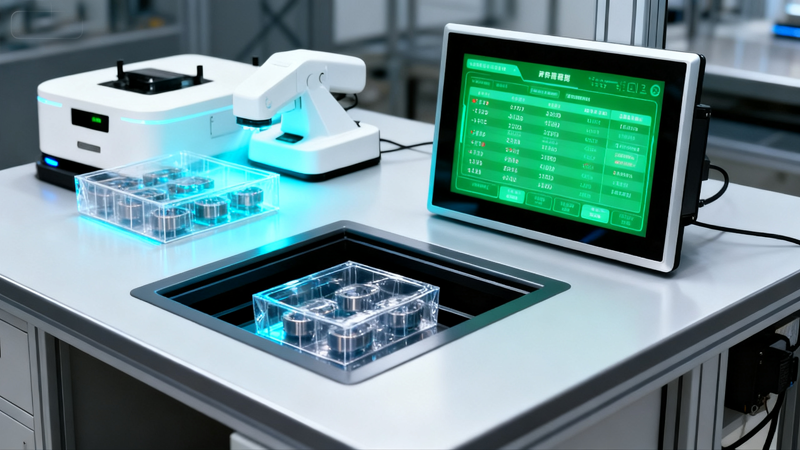
They fit seamlessly into tight workspaces, integrate with micro-assembly and testing equipment, and shield delicate components from electrostatic discharge. Whether used for programming microcontrollers, controlling pick-and-place machines, or validating micro-sensor performance, these displays deliver the accuracy and reliability micro-electronics workflows demand. This article breaks down their core features, benefits, applications, and FAQs to show how they elevate micro-electronics production.
Core Features of Mini Industrial Touch Displays for Micro-Electronics
1. Compact Design & Space-Saving Integration
Ideal for tight micro-electronics workbenches and equipment enclosures:
Small form factor (3.5–10 inches): Fits into compact workstations without sacrificing screen clarity or functionality.
Flexible mounting options: Supports panel, flush, and bracket mounting to integrate with micro-assembly tools and test benches.
Lightweight construction: Adds minimal weight to portable testing devices or benchtop equipment.
Edge-to-edge display: Maximizes usable screen area for test data and control interfaces in a tiny footprint.
This compactness frees up critical workspace for micro-components and precision tools.
2. Ultra-Precision Touch Control & Micro-Equipment Compatibility
Delivers the accuracy needed for micro-electronics assembly and testing:
5-point multi-touch support: Enables precise taps, pinches, and swipes to adjust micro-assembly parameters.
High touch accuracy (<1mm): Ensures operators can select tiny on-screen controls for micro-component positioning.
Fast response time (<5ms): Eliminates lag when controlling pick-and-place machines or micro-testing tools.
Standard protocol support: Works with micro-electronics equipment (die bonders, wire bonders, microscopes) via USB-C, SPI, and I2C.
This precision minimizes human error in micro-assembly and testing workflows.
3. ESD-Safe Design & Micro-Component Protection
Shields sensitive micro-electronics from electrostatic discharge damage:
Dissipative surface coating: Surface resistance of 10⁶–10¹¹ Ω/sq prevents static buildup and controlled discharge.
Integrated grounding: Syncs with workbench grounding systems to channel static away from microchips and sensors.
Compliance with IEC 61340-5-1: Meets global ESD standards for micro-electronics manufacturing environments.
Anti-static touch response: Ensures operator interactions do not generate static spikes that harm tiny components.
This protection eliminates ESD-related defects, a top cause of scrap in micro-electronics production.
4. Industrial-Grade Durability & Environmental Resilience
Built to withstand the rigors of micro-electronics labs and factory floors:
IP65 front-panel protection: Sealed against dust, solder paste residues, and cleaning agents common in micro-assembly.
9H tempered glass surface: Resists scratches from tools and micro-components during workspace setup.
Wide temperature tolerance: Operates reliably from -15°C to 55°C (5°F to 131°F), fitting controlled micro-electronics environments.
Anti-glare high-brightness display: 800 nits brightness with anti-reflective coating ensures clear visibility under lab lighting.
This durability guarantees 24/7 operation with minimal maintenance, even in high-throughput micro-electronics facilities.
5. Real-Time Data Monitoring & Micro-Process Traceability
Empowers engineers to track micro-assembly and testing workflows:
Compact dashboards: Displays key metrics (component placement accuracy, test pass rates, equipment status) in a small screen area.
Automated data logging: Records micro-assembly parameters and test results for batch traceability.
Alert notifications: Triggers warnings for parameter deviations or equipment malfunctions during micro-operations.
Remote access capability: Lets supervisors monitor micro-electronics processes from off-site labs.
This visibility ensures proactive quality control for micro-electronics production.
Key Benefits of Mini Industrial Touch Displays for Micro-Electronics
1. Reduce Assembly Errors & Cut Scrap Costs
Precision control and ESD protection minimize losses in micro-electronics production:
Lower defect rates by 35–45%: Eliminates misalignment and static-related damage to tiny components.
Reduce rework expenses: Fewer defective microchips and sensors mean less time spent reprocessing assemblies.
Minimize component waste: Protects high-cost micro-components from ESD damage and handling errors.
Improve batch consistency: Consistent touch control ensures uniform assembly quality across micro-electronics batches.
2. Maximize Workspace Efficiency & Productivity
Compact design optimizes tight micro-electronics workbenches:
Free up bench space: Small form factor leaves room for microscopes, tweezers, and precision assembly tools.
Speed up operator workflows: Intuitive interfaces reduce time spent adjusting micro-assembly parameters.
Simplify training: User-friendly mini displays cut onboarding time for new micro-electronics technicians.
Enable portable testing: Lightweight design supports mobile micro-component testing in field or lab settings.
3. Ensure Regulatory Compliance & Traceability
Meets strict standards for micro-electronics manufacturing and testing:
Complies with industry regulations: Aligns with ISO 9001, IATF 16949 (automotive), and FDA (medical) standards.
Enhances audit readiness: Detailed data logs support regulatory audits for micro-electronics components.
Full batch traceability: Links test results and assembly parameters to specific micro-electronics batches.
Supports certification: Helps facilities meet customer requirements for micro-component quality and safety.
4. Future-Proof Micro-Electronics Operations
Adapts to evolving miniaturization trends and technology demands:
Support smaller components: Scales to handle next-gen micro-components (008004 size and beyond) with precise touch control.
Integrate with emerging tech: Compatible with AI-powered micro-assembly tools and IoT sensor testing platforms.
Scale across workflows: Works for micro-assembly, testing, and programming, ensuring consistent operations.
Reduce upgrade costs: Industrial-grade components last 5–7 years, outperforming consumer-grade mini displays.
Practical Applications for Micro-Electronics Scenarios
1. Wearable Device Micro-Assembly
For manufacturing smartwatches, fitness trackers, and hearing aids:
Control tiny component placement (batteries, sensors, microprocessors) with precise touch interfaces.
Fit into compact assembly stations to maximize workspace for micro-welding and bonding tools.
Ensure ESD protection for sensitive wearable micro-electronics components.
2. Medical Micro-Device Testing
For validating pacemakers, glucose sensors, and surgical micro-tools:
Support sterile testing environments with IP65 protection and easy-to-clean surfaces.
Display detailed test data for micro-sensor performance on compact dashboards.
Meet FDA regulations with full traceability of micro-device test results.
3. IoT Sensor Manufacturing
For producing smart home, industrial IoT, and agricultural sensors:
Program microcontrollers directly via mini touch displays on assembly lines.
Test sensor connectivity and accuracy with real-time data monitoring.
Optimize workspace for high-volume production of tiny IoT sensors.
4. Aerospace Micro-Electronics Production
For manufacturing mission-critical aerospace micro-components:
Deliver ultra-robust ESD protection for high-reliability microchips and sensors.
Withstand vibration from aerospace testing equipment without performance loss.
Support long-term data retention to meet AS9100 aerospace quality standards.
FAQs About Mini Industrial Touch Displays for Micro-Electronics
Q1: What size range do these mini industrial touch displays offer?
A1: We offer displays in 3.5–10 inch sizes, optimized for micro-electronics workbenches. Custom sizes are available for specialized equipment integration.
Q2: Will these displays integrate with my existing micro-assembly equipment?
A2: Yes! They support standard industrial protocols (USB-C, SPI, I2C) and are compatible with leading micro-electronics equipment brands. Our team verifies compatibility for seamless setup.
Q3: Can operators use the displays with ESD-safe gloves?
A3: Absolutely. The touch screens are optimized for conductive and dissipative ESD-safe gloves, ensuring full functionality without compromising static protection.
Q4: How do the displays maintain precision in dusty micro-electronics environments?
A4: IP65 front-panel sealing prevents dust ingress, while the anti-glare coating ensures clear visibility. Routine cleaning with ESD-safe cleaners preserves touch accuracy.
Q5: What warranty and support are included for micro-electronics applications?
A5: All models include a 3-year warranty covering hardware defects, ESD protection, and touch responsiveness. Extended 5-year warranties are available, with 24/7 technical support for micro-electronics facilities.
Conclusion
Mini Industrial Touch Displays are a critical tool for modern micro-electronics manufacturing, merging compact design, ultra-precision control, and ESD protection to drive quality, efficiency, and compliance. They eliminate assembly errors, maximize workspace, and ensure that tiny components meet strict performance standards—critical for wearables, medical devices, IoT sensors, and aerospace micro-electronics. Whether you’re assembling microchips on a benchtop or testing sensors in a lab, these displays deliver the reliability and accuracy your workflows demand.
Ready to optimize your micro-electronics production with Mini Industrial Touch Displays? Fill out the form on our website to connect with our industrial display experts. We’ll assess your workspace and equipment needs, verify compatibility, and recommend a customized solution to maximize precision and productivity. Let’s build a more efficient micro-electronics manufacturing process—start today!