
Control rooms are the nerve centers of industrial operations, managing power grids, manufacturing lines, and critical infrastructure. Yet electromagnetic interference (EMI) from generators, motors, and high-voltage equipment often disrupts display performance: screen glitches, frozen interfaces, or inaccurate data readings. These issues lead to delayed decisions, equipment downtime, and safety risks for operators. In high-EMI environments, standard touch displays fail to deliver the stability and precision that control rooms demand.EMI-Shielded Industrial Touch Displays for Control Rooms solve these critical challenges.
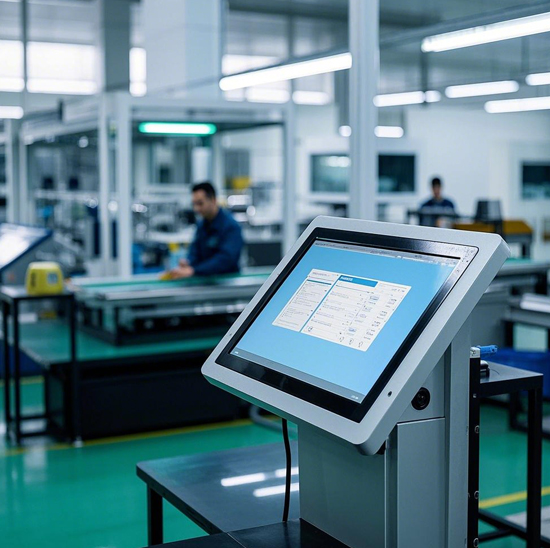
Engineered with advanced EMI shielding technology, these displays block electromagnetic interference to deliver crystal-clear visuals and responsive touch control—even in the most electrically noisy spaces. They centralize monitoring of industrial systems, let operators adjust settings with precision, and integrate seamlessly with control room software. Whether you manage a power plant control room, factory operations hub, or utility command center, these displays ensure uninterrupted, reliable performance for mission-critical tasks. This article breaks down their core features, benefits, applications, and FAQs to show how they transform control room efficiency.
Core Features of EMI-Shielded Industrial Touch Displays
1. Advanced EMI/RFI Shielding Technology
Interference resistance is the foundation of these displays—and they deliver industry-leading protection:
Multi-layer shielding design: Combines copper alloy casings, conductive gaskets, and grounded glass to block EMI/RFI signals from 10kHz to 6GHz.
Compliance with strict standards: Meets FCC Part 15, CE EN 55032, and MIL-STD-461 for electromagnetic compatibility (EMC) in industrial settings.
No signal degradation: Maintains stable performance near high-voltage equipment, motors, and radio transmitters without glitches or lag.
Shielded I/O ports: Protected USB, Ethernet, and HDMI ports prevent interference from entering through connection cables.
This robust shielding ensures operators always access accurate, real-time data—no matter how noisy the control room environment.
2. High-Visibility, Responsive Touch Interfaces
Control room operators need clear visuals and fast touch response—and these displays deliver both:
1000+ nit high-brightness screens: Ensure readability in well-lit control rooms, with anti-glare coatings to reduce eye strain.
Sub-5ms touch latency: No lag between taps and actions, critical for making fast adjustments during emergencies.
Multi-touch compatibility: Support for 10-point touch lets operators zoom, pan, and drag data dashboards with ease.
24/7 operation capability: Industrial-grade components handle continuous use without overheating or performance drops.
This combination of visibility and responsiveness keeps operators productive and focused on critical tasks.
3. Rugged, Control Room-Grade Durability
Control rooms demand long-lasting, low-maintenance displays—and these models deliver:
IP65 front-panel protection: Sealed screens block dust, spills, and cleaning chemicals from damaging internal components.
Temperature tolerance: Operate reliably from -10°C to 50°C (14°F to 122°F), fitting climate-controlled control rooms and adjacent equipment bays.
Scratch-resistant glass: 9H tempered glass resists damage from tools, accidental bumps, and daily cleaning.
Vibration resistance: Reinforced mounting brackets handle minor vibrations from nearby machinery without screen flickering.
This durability reduces replacement costs and ensures consistent performance for 7–10 years of daily use.
4. Seamless Integration with Control Room Systems
They connect with your existing infrastructure to avoid workflow disruptions:
SCADA/DCS compatibility: Works with leading control systems (Siemens, Allen-Bradley, ABB) for real-time data visualization.
Multiple communication protocols: Support Modbus TCP, OPC UA, and Ethernet/IP for stable data transfer with industrial equipment.
Customizable dashboards: Let operators tailor data views to prioritize KPIs like production rates, voltage levels, or equipment status.
Cloud connectivity options: Sync with remote monitoring platforms for off-site access to control room data during emergencies.
This integration ensures the displays fit seamlessly into your current control room setup.
5. User-Friendly Features for Control Room Operators
These displays are designed to reduce operator fatigue and boost efficiency:
Ergonomic mounting options: Wall-mounted, rack-mounted, or desktop designs to fit any control room layout.
Adjustable brightness and contrast: Auto-adapt to ambient light or let operators manually tweak settings for comfort.
Gloved-hand touch sensitivity: Enhanced responsiveness works with nitrile or latex gloves, so operators don’t need to remove PPE.
Multi-language support: Offer English, Spanish, German, and Chinese to cater to global control room teams.
Key Benefits for Control Room Operations
1. Eliminate EMI-Related Downtime & Errors
EMI interference is a top cause of control room disruptions—and these displays eliminate it:
99.9% uptime guarantee: Shielding technology prevents screen glitches, freezes, or data corruption during peak EMI exposure.
Reduce human error: Accurate data visualization ensures operators make correct decisions about equipment adjustments or emergency responses.
Avoid costly delays: Eliminate downtime from display malfunctions that force control rooms to switch to backup systems.
Improve data reliability: Ensure sensor readings and equipment status updates are always accurate and up-to-date.
2. Boost Operator Productivity & Safety
Control room operators rely on clear, responsive tools to do their jobs safely—and these displays deliver:
Simplify complex data: Custom dashboards organize information into easy-to-read visuals, reducing time spent searching for critical data.
Speed up emergency responses: Responsive touch controls let operators trigger shutdowns or adjustments in seconds during crises.
Reduce eye strain: High-brightness, anti-glare screens minimize fatigue during long shifts in control rooms.
Enhance situational awareness: Real-time data visualization keeps operators informed about every aspect of industrial operations.
3. Lower Long-Term Operational Costs
Durable, low-maintenance displays translate to significant savings:
Extended lifespan: Industrial-grade components last 2–3 times longer than consumer-grade displays, reducing replacement frequency.
Minimal maintenance needs: Sealed design and rugged construction eliminate the need for frequent repairs or cleaning.
Energy efficiency: Low-power consumption cuts electricity costs for 24/7 control room operations.
Reduce training time: Intuitive interfaces let new operators master the displays in hours, not days.
4. Ensure Compliance with Industry Regulations
Control rooms face strict regulatory standards—and these displays help meet them:
EMC compliance documentation: Comes with certificates to prove adherence to global EMI/RFI standards for industrial equipment.
Data logging capabilities: Automatically record display performance and system data for audit trails and compliance reports.
Safety certifications: Meet ISO 13849 and OSHA standards for use in safety-critical control room environments.
Audit-ready reports: Generate logs of operator actions and system status to simplify regulatory inspections.
Practical Applications for Different Control Room Types
1. Power Plant Control Rooms
For thermal, nuclear, or renewable energy power plants:
Monitor grid voltage and frequency: Visualize real-time data from generators and transformers without EMI interference.
Control turbine and boiler operations: Adjust settings with precision to maintain power output and safety standards.
Integrate with SCADA systems: Sync with plant-wide monitoring tools to centralize all critical data on one display.
2. Manufacturing & Factory Control Rooms
For automotive, pharmaceutical, or food and beverage production facilities:
Track production line efficiency: Monitor machine uptime, output rates, and quality control metrics in real time.
Control automated assembly systems: Adjust robot movements and conveyor speeds with responsive touch controls.
Manage inventory and supply chains: Integrate with ERP systems to link production data with inventory levels.
3. Utility & Infrastructure Control Rooms
For water treatment plants, wastewater facilities, or telecommunications hubs:
Monitor pipeline pressure and flow: Track data from sensors without interference from pumps or motors.
Control treatment processes: Adjust chemical dosing or filtration settings to meet water quality standards.
Manage emergency responses: Trigger alerts and adjustments during floods, equipment failures, or supply disruptions.
4. Oil & Gas Control Rooms
For refineries, drilling operations, or pipeline networks:
Monitor wellhead pressure and flow rates: Visualize data from remote drilling sites without EMI interference.
Control refining processes: Adjust temperatures and pressures to optimize fuel production and safety.
Integrate with safety systems: Sync with fire and gas detection tools to trigger emergency shutdowns fast.
FAQs About EMI-Shielded Industrial Touch Displays
Q1: What levels of EMI shielding do these displays offer?
A1: These displays provide multi-layer shielding that blocks EMI/RFI signals from 10kHz to 6GHz, meeting FCC Part 15, CE EN 55032, and MIL-STD-461 standards for industrial EMC compliance.
Q2: Will the displays work with my existing SCADA or DCS system?
A2: Yes. They are compatible with all leading control room systems, including Siemens, Allen-Bradley, ABB, and Honeywell, and support standard protocols like Modbus TCP and OPC UA for seamless integration.
Q3: Can the displays operate 24/7 in a control room environment?
A3: Absolutely. They are built with industrial-grade components that handle continuous 24/7 operation without overheating, performance drops, or screen burn-in.
Q4: Are the displays easy to clean and maintain in a control room?
A4: Yes. The IP65 front-panel protection lets you clean the screens with disinfectant wipes or glass cleaners without damaging internal parts. The sealed design also reduces dust buildup and maintenance needs.
Q5: What warranty comes with EMI-Shielded Industrial Touch Displays?
A5: All models include a 3-year warranty covering hardware defects, EMI shielding integrity, and touch responsiveness. Extended 5-year warranties are available for critical control room applications, with 24/7 technical support.
Conclusion
EMI-Shielded Industrial Touch Displays are a game-changer for control rooms operating in high-electromagnetic environments. Their advanced shielding technology eliminates interference-related disruptions, while their responsive interfaces and rugged design boost operator productivity and safety. Whether you manage a power plant, factory, or utility control room, these displays ensure uninterrupted access to accurate data—critical for making fast, informed decisions that keep operations running smoothly.
Ready to upgrade your control room with interference-free, reliable EMI-Shielded Industrial Touch Displays? Fill out the form on our website to connect with our industrial display experts. We’ll assess your control room’s EMI environment, verify system compatibility, and recommend a customized solution that meets your operational needs. Let’s turn your control room into a more efficient, reliable hub for industrial operations—start today!