
Các doanh nghiệp dịch vụ hiện đại theo đuổi dịch vụ nhanh hơn và hoạt động hàng ngày suôn sẻ hơn. Chủ cửa hàng tìm kiếm các công cụ ổn định để giảm áp lực vào giờ cao điểm và giảm sai sót của con người. Nhiều chủ doanh nghiệp áp dụng các thiết bị tự phục vụ thông minh để nâng cấp quy trình làm việc của họ., ki-ốt đã trở nên phổ biến trong lĩnh vực phục vụ ăn uống, không gian bán lẻ và dịch vụ công cộng. Nhiều người bắt đầu lo ngại những thiết bị thông minh này sẽ lấy đi việc làm của con người.
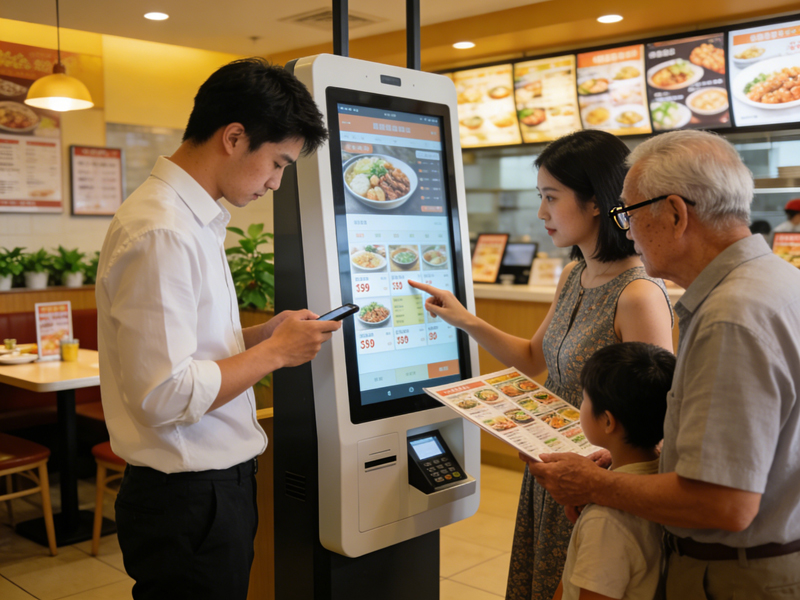
Sự thật, ki-ốt không loại bỏ công nhân. Thay vì, họ định hình lại nội dung công việc và tối ưu hóa việc phân bổ công việc nhóm. Bài viết này giải thích lý do tại sao các ki-ốt bổ sung nhân viên, họ xử lý những nhiệm vụ gì, và cách họ thay đổi công việc dịch vụ hiện đại.
Những nhiệm vụ hàng ngày mà ki-ốt đảm nhiệm trong các doanh nghiệp dịch vụ
Kiosk chỉ tập trung vào việc lặp đi lặp lại, làm việc theo quy tắc. Họ xử lý những công việc đơn giản hàng ngày gây lãng phí sức lao động của con người.
1. Thu thập đơn hàng nhanh và ghi lại mặt hàng
Kiosk hoàn thành việc lựa chọn đơn đặt hàng của khách hàng và ghi dữ liệu. Họ tuân theo các quy tắc chương trình cố định mà không mệt mỏi. Như vậy, họ duy trì tốc độ ổn định trong giờ bận rộn.
2. Tính toán chiết khấu và thanh toán tự động
Các thiết bị này tính toán tổng đơn hàng và áp dụng các chương trình khuyến mãi hợp lệ. Họ tránh những tính toán sai lầm thủ công xảy ra với những nhân viên mệt mỏi. Họ cũng giữ mọi hồ sơ thanh toán rõ ràng và chuẩn mực.
3. Xử lý thanh toán độc lập và in biên lai
Kiosk hỗ trợ thanh toán một lần và đầu ra biên lai. Họ giảm bớt công việc thủ công tầm thường cho các nhóm tại chỗ. Trong khi đó, họ rút ngắn thời gian chờ đợi của khách hàng rất nhiều.
Tại sao ki-ốt không bao giờ có thể thay thế hoàn toàn nhân công con người
Ngay cả với khả năng tự động hóa mạnh mẽ, ki-ốt có giới hạn rõ ràng. Nhân viên nắm giữ giá trị dịch vụ cốt lõi không thể thay thế.
1. Kiosk không thể giải quyết các vấn đề linh hoạt của khách hàng
Thiết bị thông minh chỉ phản hồi các hướng dẫn đặt trước. Họ không thể xử lý các yêu cầu đặc biệt, khiếu nại hoặc trường hợp ngoại lệ được cá nhân hóa. Mặt khác, nhân viên giải quyết các vấn đề đa dạng của khách hàng một cách linh hoạt.
2. Kiosk thiếu nhiệt độ phục vụ tình cảm của con người
Ngành dịch vụ cần sự giao tiếp và kiên nhẫn. Nhân viên cung cấp hướng dẫn thân thiện và tương tác cảm xúc. Kiosk chỉ cung cấp lạnh, hoạt động cơ khí tiêu chuẩn hóa.
3. Kiosk phụ thuộc hoàn toàn vào việc bảo trì của con người
Tất cả các ki-ốt đều cần vệ sinh thủ công, cập nhật hệ thống và kiểm tra lỗi. Công nhân đảm bảo thiết bị hoạt động ổn định hàng ngày. Không có ki-ốt nào có thể hoạt động độc lập nếu không có sự hỗ trợ của con người.
4. Vận hành tại chỗ cần có sự giám sát của con người
Giờ cao điểm đông đúc cần có hướng dẫn tận nơi và sắp xếp đơn hàng. Nhân viên hướng dẫn người dùng mới và duy trì trật tự cửa hàng. Kiosk không thể quản lý hoạt động tổng thể của cửa hàng.
Cách các ki-ốt tối ưu hóa công việc thay vì thay thế chúng
Thay vì cắt giảm việc làm, ki-ốt thúc đẩy công việc dịch vụ được nâng cấp và trở nên có giá trị hơn.
1. Chuyển nhân viên từ công việc lặp đi lặp lại sang công việc cốt lõi
Công nhân dành ít thời gian hơn cho việc đặt hàng và thanh toán cơ học. Họ tập trung vào sản xuất sản phẩm, vệ sinh cửa hàng và cải thiện trải nghiệm khách hàng. Công việc của họ trở nên chuyên nghiệp hơn.
2. Tạo vị trí công việc kỹ thuật mới
Cửa hàng cần nhân viên quản lý, gỡ lỗi và bảo trì hệ thống kiosk. Những vai trò kỹ thuật mới này làm phong phú thêm các lựa chọn công việc và cải thiện tính chuyên nghiệp của nhóm.
3. Giảm áp lực công việc và mệt mỏi của nhân viên
Kiosk chia sẻ khối lượng công việc cường độ cao vào giờ cao điểm. Nhân viên ít phải đối mặt với lao động lặp đi lặp lại và giảm áp lực công việc. Sự thay đổi này cải thiện sự hài lòng chung về công việc.
Ưu điểm kinh doanh cốt lõi của Kiosk + Hợp tác nhân viên
Sự kết hợp giữa ki-ốt và con người tạo nên mô hình dịch vụ hiện đại tốt nhất.
1. Cân bằng hiệu quả cao và chất lượng dịch vụ
Kiosk đảm bảo nhanh chóng, dịch vụ tiêu chuẩn hóa không có lỗi. Nhân viên bù đắp những khoảng trống dịch vụ linh hoạt và nhân văn. Hai bên hợp tác để ổn định hoạt động cửa hàng.
2. Cải thiện sự hài lòng của khách hàng một cách đều đặn
Khách hàng có thể tự do lựa chọn dịch vụ tự phục vụ hoặc dịch vụ thủ công. Họ thích đặt hàng nhanh và hướng dẫn tận nơi nhiệt tình. Chế độ linh hoạt này phù hợp với các thói quen khác nhau của người dùng.
3. Cắt giảm chi phí vận hành dài hạn
Kiosk giảm tỷ lệ lỗi và lãng phí lao động. Trong khi đó, nhân viên tối đa hóa giá trị dịch vụ cốt lõi. Doanh nghiệp thu được lợi nhuận ổn định và bền vững hơn.
Câu hỏi thường gặp về ki-ốt thay thế công nhân
Q1: Các ki-ốt sẽ gây mất việc làm trong ngành dịch vụ?
A1: KHÔNG. Ki-ốt chỉ thay thế lao động cơ bản lặp đi lặp lại. Chúng thúc đẩy nâng cao việc làm và tạo ra các vị trí kỹ thuật mới thay vì giảm tổng số việc làm.
Q2: Các cửa hàng có thể hoạt động hoàn toàn không có người trực chỉ với các ki-ốt không??
A2: KHÔNG. Kiosk cần được bảo trì thường xuyên, dọn dẹp và khắc phục sự cố. Sự giám sát của con người vẫn cần thiết để hoạt động ổn định lâu dài.
Q3: Công việc nào chỉ có con người mới có thể hoàn thành?
A3: Xử lý vấn đề phức tạp, giao tiếp cảm xúc, bảo trì thiết bị và quản lý cửa hàng đều dựa vào đội ngũ nhân viên chuyên nghiệp. Kiosk không thể hoàn thành những nhiệm vụ linh hoạt này.
Q4: Ki-ốt có giúp nhân viên làm việc dễ dàng hơn không?
A4: Đúng. Kiosk đảm nhận công việc lặp đi lặp lại tẻ nhạt. Nhân viên tập trung vào công việc dịch vụ có giá trị cao và bớt mệt mỏi vào giờ cao điểm.
Q5: Mô hình hợp tác kiosk và nhân viên có phải là xu hướng trong tương lai?
A5: Đúng. Chế độ kết hợp này cân bằng giữa hiệu suất và nhiệt độ sử dụng. Nó đã trở thành xu hướng phát triển tiêu chuẩn cho ngành dịch vụ ăn uống và bán lẻ.
Phần kết luận
Để kết luận, ki-ốt không thay thế được công nhân trong các ngành dịch vụ hiện đại. Họ đảm nhận giá trị thấp, công việc cơ khí lặp đi lặp lại để giảm bớt áp lực cho nhân viên. Hơn nữa, họ thúc đẩy nâng cấp công việc, tối ưu hóa phân bổ lao động và tạo hướng công việc mới. Nhân viên con người vẫn thống trị dịch vụ linh hoạt, giao tiếp cảm xúc và quản lý thiết bị. Sự kết hợp hoàn hảo giữa ki-ốt và nhân viên mang lại hiệu quả, dịch vụ ổn định và nhân bản cho tất cả các loại cửa hàng.
Nếu bạn muốn triển khai các ki-ốt tự phục vụ có độ ổn định cao để tối ưu hóa cơ cấu lao động tại cửa hàng và nâng cao hiệu quả hoạt động, vui lòng điền vào mẫu yêu cầu trên trang web chính thức của chúng tôi. Chia sẻ loại hình kinh doanh và nhu cầu chức năng của bạn, và nhóm của chúng tôi sẽ cung cấp giải pháp kiosk tùy chỉnh cho dự án của bạn.