Les lignes de remplissage de bouteilles sont l’élément vital des boissons, cosmétique, et installations pharmaceutiques : chaque minute d'arrêt coûte de l'argent, retarde les commandes, et perturbe les calendriers de production. Les commandes traditionnelles des lignes de remplissage de bouteilles reposent sur des cadrans complexes, interrupteurs manuels, et des systèmes de surveillance séparés, ce qui ralentit le dépannage, augmenter l'erreur humaine, et prolonger les temps d'arrêt lorsque des problèmes surviennent.
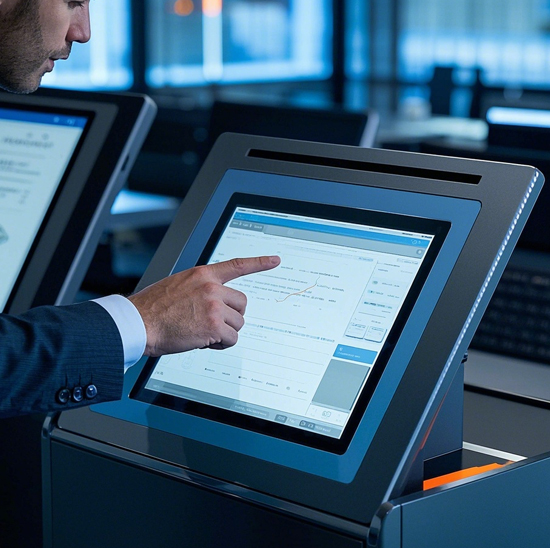
Cela amène de nombreux gestionnaires d'installations à se demander: Une ligne de remplissage de bouteilles peut-elle Écran tactile réduire les temps d'arrêt et maintenir le bon fonctionnement de la production? La réponse est absolument oui. Ces écrans tactiles spécialisés centralisent le contrôle, simplifier la surveillance, et accélérez la résolution des problèmes, le tout avec une interface intuitive qui réduit le temps de formation et les erreurs.. Ce guide explique comment les écrans tactiles minimisent les temps d'arrêt, fonctionnalités clés à prioriser, avantages concrets, et des FAQ pour vous aider à décider s'il s'agit de la bonne mise à niveau pour votre installation. Que vous exploitiez une petite ligne de remplissage ou une usine de production à grande échelle, ces informations vous aideront à réduire les perturbations, accroître l'efficacité, et protégez vos résultats.
Comment les écrans tactiles des lignes de remplissage de bouteilles réduisent les temps d'arrêt
Les écrans tactiles de la ligne de remplissage de bouteilles réduisent les temps d'arrêt en rationalisant le contrôle, permettant une surveillance en temps réel, et simplifier le dépannage. Voici exactement comment ils font la différence.
1. Alertes et diagnostics de problèmes en temps réel
Les temps d'arrêt s'allongent souvent car les opérateurs perdent du temps à identifier la cause première des problèmes..
Les écrans tactiles affichent des alertes en temps réel pour les problèmes courants: faibles niveaux de produit, bouteilles coincées, ou dysfonctionnements de l'équipement.
Les diagnostics intégrés identifient instantanément le problème (Par exemple, « bourrage de bouteille à la station de capsulage » ou « basse pression dans la buse de remplissage »).
Les opérateurs n'ont pas besoin de vérifier manuellement chaque composant : ils peuvent voir le problème et le résoudre en quelques minutes., pas des heures.
2. Contrôle centralisé pour tous les composants de la ligne
Les lignes de remplissage traditionnelles ont des contrôles séparés pour le remplissage, plafonnement, étiquetage, et les systèmes de convoyeurs, créant de la confusion et des retards.
Un seul écran tactile centralise le contrôle de tous les composants de la ligne, afin que les opérateurs puissent ajuster les paramètres à partir d'une seule interface.
Modification des niveaux de remplissage, vitesse du convoyeur, ou la pression de bouchage prend quelques secondes en quelques clics, pas besoin de se déplacer entre les panneaux de commande.
Cela rationalise les ajustements et réduit le risque de mauvaise communication entre les opérateurs.
3. Dépannage simplifié avec des guides étape par étape
Même les opérateurs expérimentés sont confrontés à des dysfonctionnements complexes : les écrans tactiles facilitent le dépannage pour tout le monde.
Des guides étape par étape intégrés guident les opérateurs dans la résolution des problèmes courants (Par exemple, débloquer les bouteilles ou réinitialiser les buses de remplissage).
Les diagrammes visuels montrent l'emplacement des composants, afin que les opérateurs puissent rapidement localiser et résoudre les problèmes.
Cela réduit le temps de dépannage et réduit le besoin d'une assistance technique spécialisée..
4. Rappels de maintenance préventive
Les temps d'arrêt imprévus proviennent souvent d'une maintenance négligée : les écrans tactiles vous aident à rester proactif.
Définir des rappels de maintenance personnalisés pour les composants critiques (Par exemple, « nettoyer les buses de remplissage tous les 8 heures » ou « inspecter les bandes transporteuses chaque semaine »).
L'écran affiche des alertes lorsque la maintenance est due, afin que vous puissiez effectuer l'entretien pendant les pauses programmées, pas pendant la production.
Cela évite les pannes inattendues et permet à votre ligne de remplissage de fonctionner de manière cohérente..
Caractéristiques indispensables d’un écran tactile de ligne de remplissage de bouteilles
Pour réduire efficacement les temps d'arrêt, un écran tactile a besoin de fonctionnalités spécifiques adaptées aux exigences des opérations de remplissage de bouteilles, de la durabilité à la fonctionnalité en temps réel.
1. Durabilité de qualité industrielle
Les installations de remplissage de bouteilles sont des environnements difficiles : les écrans tactiles doivent résister à la poussière, humidité, et vibrations constantes.
Recherchez un indice IP65 ou supérieur pour bloquer la poussière, éclaboussures d'eau, et résidus chimiques (Par exemple, produits de nettoyage).
Les écrans en verre trempé résistent aux rayures causées par les outils, bouteilles, ou de l'équipement.
Les composants internes robustes gèrent les vibrations de la ligne de remplissage, éviter les décalages ou les arrêts pendant le fonctionnement.
2. Intuitif, Interface conviviale pour l'opérateur
Les opérateurs des lignes de remplissage sont occupés : votre écran tactile doit être facile à utiliser, même dans des situations de haute pression.
Grand, des icônes claires et une navigation simple permettent d'accéder rapidement aux commandes et de résoudre les problèmes.
Une formation minimale est requise, afin que les nouveaux opérateurs puissent apprendre à l'utiliser en quelques minutes.
Des tableaux de bord personnalisables vous permettent de prioriser les données les plus importantes (Par exemple, taux de remplissage, journaux de temps d'arrêt, statut d'alerte).
3. Surveillance de la production en temps réel
La visibilité sur les données de production vous aide à repérer les problèmes avant qu'ils n'entraînent des temps d'arrêt..
L'écran tactile affiche les mesures en direct: taux de remplissage, nombre de bouteilles remplies, taux de rejet, et l'état des composants.
Indicateurs à code couleur (vert pour normal, jaune pour avertissement, rouge pour erreur) faciliter la détection des anomalies.
Cela vous permet de résoudre de petits problèmes (Par exemple, niveaux de remplissage légèrement bas) avant qu'ils ne dégénèrent en temps d'arrêt majeur.
4. Intégration avec les composants de la ligne de remplissage
Un écran tactile de qualité doit se synchroniser parfaitement avec votre équipement de ligne de remplissage existant.
Il s'intègre aux buses de remplissage, convoyeurs, machines à capsuler, et des capteurs pour assurer un contrôle précis.
La conception plug-and-play facilite l'installation, sans câblage complexe ni modifications du système.
Certains modèles offrent une connectivité avec un logiciel de gestion de production, vous permettant de suivre les tendances des temps d'arrêt et d'optimiser l'efficacité.
5. Compatibilité des mains gantées
Les opérateurs de lignes de remplissage portent souvent des gants pour manipuler les bouteilles et maintenir l'hygiène : votre écran tactile doit fonctionner avec eux..
L'écran est calibré pour détecter les tapotements des doigts gantés, les opérateurs n'ont donc pas besoin de retirer leurs gants pour l'utiliser.
Cela garantit la sécurité et l’efficacité des opérateurs, car ils ne perdent pas de temps à enfiler et à enlever leurs gants entre les tâches.
6. Fonctionnalité hors ligne
Les installations peuvent subir des pannes d'Internet : votre écran tactile devrait toujours fonctionner pendant ces périodes..
Le mode hors ligne permet aux opérateurs de contrôler la ligne de remplissage et d'enregistrer les problèmes même sans connexion Internet.
Les données se synchronisent automatiquement une fois Internet de retour, s'assurer qu'aucune information critique n'est perdue.
Cela évite les interruptions de production et le dépannage en cas de pannes inattendues..
Principaux avantages des écrans tactiles des lignes de remplissage de bouteilles (Au-delà de la réduction des temps d'arrêt)
Même si la réduction des temps d'arrêt est le principal avantage, les écrans tactiles offrent des avantages supplémentaires qui améliorent l’efficacité et la rentabilité globales de votre installation.
1. Augmentation de la production
Moins de temps d'arrêt signifie plus de bouteilles remplies par équipe.
Un dépannage et des réglages plus rapides permettent à votre ligne de fonctionner à pleine capacité plus longtemps.
Paramètres préprogrammés pour différentes tailles de bouteilles ou produits réduisant le temps de changement entre les lots.
Cela augmente la production de votre installation et vous aide à respecter des délais de commande serrés..
2. Erreur humaine réduite
Les commandes manuelles sont sujettes aux erreurs (Par exemple, niveaux de remplissage incorrects, mauvaise vitesse du convoyeur) qui provoquent des temps d'arrêt.
Les écrans tactiles éliminent les approximations grâce à des commandes numériques précises et un retour visuel.
Les alertes d'erreur informent les opérateurs des erreurs avant qu'elles n'affectent la production, réduire les rebuts et les retouches.
Cela réduit le gaspillage de produits et les temps d'arrêt supplémentaires dus à la correction des erreurs..
3. Formation et intégration simplifiées
Les contrôles traditionnels des lignes de remplissage sont complexes et nécessitent une formation approfondie pour les nouveaux opérateurs.
Les écrans tactiles présentent des interfaces intuitives faciles à apprendre : les nouveaux opérateurs peuvent maîtriser les fonctions de base en quelques heures, pas des jours.
Des didacticiels et des info-bulles intégrés guident les opérateurs dans les tâches, réduisant le besoin de formation individuelle.
Cela réduit les coûts de formation et garantit un fonctionnement cohérent au sein de votre équipe.
4. De meilleures données pour l'optimisation des processus
Les écrans tactiles collectent des données de production précieuses qui vous aident à optimiser votre ligne de remplissage.
Générer des rapports sur les causes des temps d'arrêt, taux de production, et performances des équipements.
Identifier les tendances (Par exemple, bouchons fréquents à la station de capsulage) et apporter des améliorations ciblées.
Cela vous aide à réduire les temps d'arrêt futurs et à gérer votre ligne de remplissage plus efficacement..
FAQ sur les écrans tactiles des lignes de remplissage de bouteilles
Q1: Un écran tactile de ligne de remplissage de bouteilles peut-il fonctionner avec tous les types de lignes de remplissage?
A1: Oui. Il est compatible avec toutes les lignes de remplissage de bouteilles standards, des petits modèles semi-automatiques aux grandes lignes de production entièrement automatiques..
Q2: Combien de temps d'arrêt un écran tactile peut-il réellement réduire?
A2: En moyenne, les écrans tactiles réduisent les temps d'arrêt de 30 à 50 %. Cela varie selon l'établissement, mais la plupart constatent des réductions significatives du temps de dépannage et de changement.
Q3: Dois-je remplacer toute ma ligne de remplissage pour installer un écran tactile?
A3: Non. La plupart des écrans tactiles sont conçus pour être modernisés : ils s'intègrent à votre équipement existant avec des modifications minimes..
Q4: Les opérateurs peuvent-ils utiliser l'écran tactile avec des gants?
A4: Oui. Tous les écrans tactiles fiables des lignes de remplissage de bouteilles sont calibrés pour détecter les tapotements des doigts gantés., les opérateurs n'ont donc pas besoin de retirer leurs gants.
Q5: Combien de temps faut-il pour installer un écran tactile?
A5: L'installation est rapide : la plupart des modèles prennent 2 à 4 heures pour être installés et configurés.. Votre équipe de maintenance interne peut s’en charger facilement.
Q6: L'écran tactile fonctionnera-t-il dans un environnement humide ou poussiéreux?
A6: Oui. Les modèles de qualité ont des indices de résistance à la poussière et à l'eau IP65 ou supérieurs, ce qui les rend adaptés aux environnements difficiles des lignes de remplissage.
Q7: Puis-je accéder aux données de production à distance?
A7: De nombreux modèles offrent un accès à distance : vous pouvez consulter les mesures de production, journaux de temps d'arrêt, et alertes depuis votre téléphone ou votre ordinateur, même lorsque vous n'êtes pas sur place.
Q8: Combien de temps durent les écrans tactiles des lignes de remplissage de bouteilles?
A8: Avec des soins appropriés, ils durent 3 à 5 ans. Leur conception robuste résiste à l’usure liée à l’utilisation des lignes de remplissage, garantir une fiabilité à long terme.
Conclusion
Les écrans tactiles des lignes de remplissage de bouteilles sont une solution éprouvée pour réduire les temps d'arrêt, augmenter la productivité, et rationalisation des opérations dans le secteur des boissons, cosmétique, et installations pharmaceutiques. En centralisant le contrôle, permettant une surveillance en temps réel, et simplifier le dépannage, ces écrans tactiles transforment les temps d'arrêt imprévus en perturbations minimes, vous faisant ainsi gagner du temps, argent, et frustration.
Que vous en ayez assez des longues sessions de dépannage, pannes fréquentes d'équipement, ou des changements inefficaces, un écran tactile pour ligne de remplissage de bouteilles est un investissement intelligent. Il est conçu pour répondre aux exigences des lignes de remplissage très fréquentées, avec une construction durable, commandes intuitives, et des fonctionnalités qui assurent le bon déroulement de la production.
Si vous êtes prêt à réduire les temps d’arrêt des lignes de remplissage de bouteilles et à optimiser votre production, notre équipe est là pour vous aider. Remplissez le formulaire sur notre site Web pour partager votre type de ligne de remplissage, volume de production, et les défis liés aux temps d'arrêt. Nous vous fournirons des recommandations personnalisées, spécifications détaillées, et une assistance d'experts pour vous aider à trouver l'écran tactile de ligne de remplissage de bouteilles parfait pour votre installation. Réduisons les temps d’arrêt, augmenter la production, et protégez vos résultats — commencez dès aujourd'hui!