
Self-service technology reshapes daily business and public services today. Kiosks streamline manual work, cut waiting lines and improve user experience across many industries. Even so, most people only see basic ordering or payment kiosks in daily life.
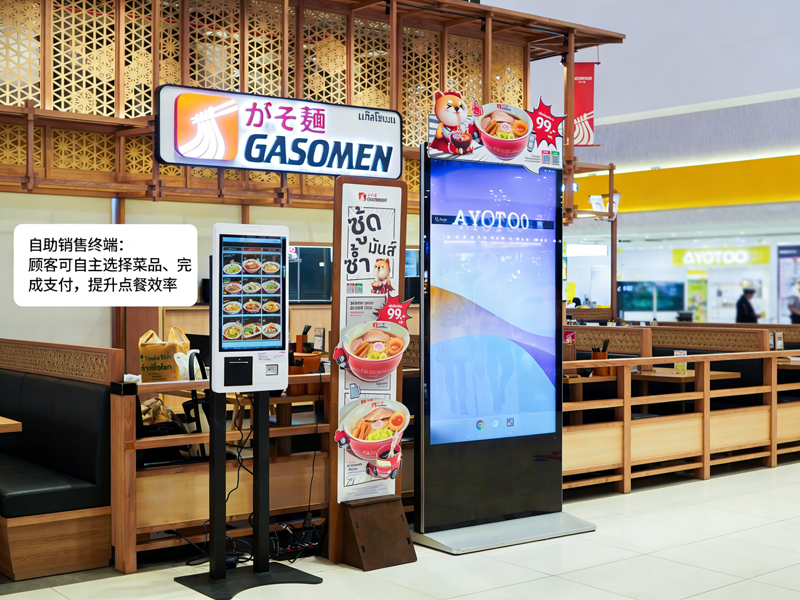
In fact, the market features seven distinct kiosk types. Each kiosk serves unique functions and targets specific application scenarios. Moreover, different models carry exclusive hardware and software designs. This article lists and explains all seven types of kiosks, their core features, typical use cases and practical advantages.
The 7 Major Types of Kiosks and Their Core Uses
Every kiosk type focuses on independent service goals. You can select matching models based on business demands.
1. Self-Ordering Kiosk
Self-ordering kiosk rank as the most common commercial type. They focus on food and retail product selection and customization. They let users browse menus, adjust orders and confirm items independently.
These kiosks mainly serve fast-food stores, casual dining shops and snack bars. They reduce counter queuing and lower manual order errors effectively.
2. Self-Payment Kiosk
Payment kiosks specialize in unmanned fund settlement. They support cash, card and mobile payment methods. They auto-calculate bills and apply valid store discounts.
They fit retail stores, service halls and small catering venues. They share staff workload and speed up peak-hour checkout processes.
3. Self-Checkout Kiosks
Self-checkout kiosk integrate scanning, weighing and payment functions. Users scan product barcodes and finish full checkout workflows alone.
Supermarkets, grocery stores and convenience stores widely adopt this type. It shortens shopping time and optimizes store labor allocation.
4. Informational & Wayfinding Kiosk
Informational kiosks act as digital inquiry terminals. They display maps, venue guides, event schedules and public notices. They offer free self-help information queries.
You can find them in malls, airports, hospitals and scenic spots. They replace manual consultation and guide user flow efficiently.
5. Ticketing & Reservation Kiosks
Ticketing kiosk focus on automated ticket printing and seat booking. Users select projects, choose seats and print tickets after successful payment.
They serve cinemas, transit stations, exhibition halls and scenic areas. They eliminate long queuing for manual ticket windows.
6. Registration & Check-In Kiosks
Check-in kiosks support self-registration and identity verification. They collect user information and generate registration records automatically.
Hotels, hospitals, schools and office buildings use these devices. They simplify entry procedures and improve service efficiency greatly.
7. Vending & Dispensing Kiosk
Vending kiosk combine payment and automatic product output. Users pay for goods, and the machine dispenses items instantly.
They apply to unmanned retail, medical supplies and daily commodity sales. They realize 24-hour unattended business operation.
Key Differences Between the 7 Kiosk Types
Understanding core differences helps you pick the right kiosk for your business.
1. Functional positioning differences
Order and payment kiosks focus on transaction services. Information and check-in kiosks prioritize service guidance and data recording. Vending kiosk complete full product sales loops.
2. Application scenario differences
Catering and retail venues use transaction-based kiosk. Public spaces prefer inquiry and ticketing kiosks. Unmanned scenarios rely on dispensing kiosk.
3. Hardware configuration differences
Transaction kiosks need payment modules and printers. Information kiosks adopt high-definition display screens. Vending kiosks equip intelligent cargo delivery structures.
How to Choose the Right Kiosk Type for Your Business
You can match suitable kiosk based on actual operational needs.
1. Confirm your core service demands
Clarify whether you need ordering, payment, inquiry or sales functions. Single-demand scenarios fit basic kiosk models. Complex scenarios support multi-function customized versions.
2. Match your business venue features
Indoor commercial spaces adapt to slim touchscreen kiosk. Public venues need durable and anti-collision devices. Unmanned sites require stable all-weather kiosks.
3. Consider long-term operational goals
Choose multi-functional kiosk if you plan business expansion. Standard single-function models control costs for small-scale fixed businesses.
FAQs About the 7 Types of Kiosks
Q1: What are the main 7 types of kiosks on the market?
A1: They include self-ordering, self-payment, self-checkout, informational, ticketing, registration, and vending kiosks. Each type serves independent business and public service purposes.
Q2: Which kiosk type suits catering businesses best?
A2: Self-ordering and self-payment kiosks work best for catering stores. They speed up ordering processes and reduce on-site staffing pressure.
Q3: Are informational kiosks different from transaction kiosk?
A3: Yes. Informational kiosks only provide query and guide services. Transaction kiosks support ordering, payment and product sales behaviors.
Q4: Can one kiosk integrate multiple types of functions?
A4: Yes. Customized kiosks can combine ordering, payment and printing functions. They meet diverse service needs for complex business scenarios.
Q5: Which kiosk type fits 24-hour unmanned operation?
A5: Vending and dispensing kiosk suit unmanned operation. They work stably all day without continuous staff supervision.
Conclusion
To summarize, seven mainstream types of kiosks cover all modern self-service scenarios. Ordering, payment and checkout kiosks optimize commercial transactions. Information, ticketing and check-in kiosks upgrade public service efficiency. Vending kiosks support unmanned retail operations. Every kiosk type delivers unique value for specific industries and venues. Reasonable selection can greatly cut labor costs and improve service experience.
If you want to customize professional, scenario-matched kiosks for your business, please fill out the inquiry form on our official website. Share your venue type, core functions and usage demands. Our team will provide exclusive tailored kiosk solutions for your project.