消息

随时了解最新的触摸显示器新闻

科技趋势, 新产品发布, 行业洞察

以及满足您需求的实际应用技巧.

自助服务终端正在取代工人吗?

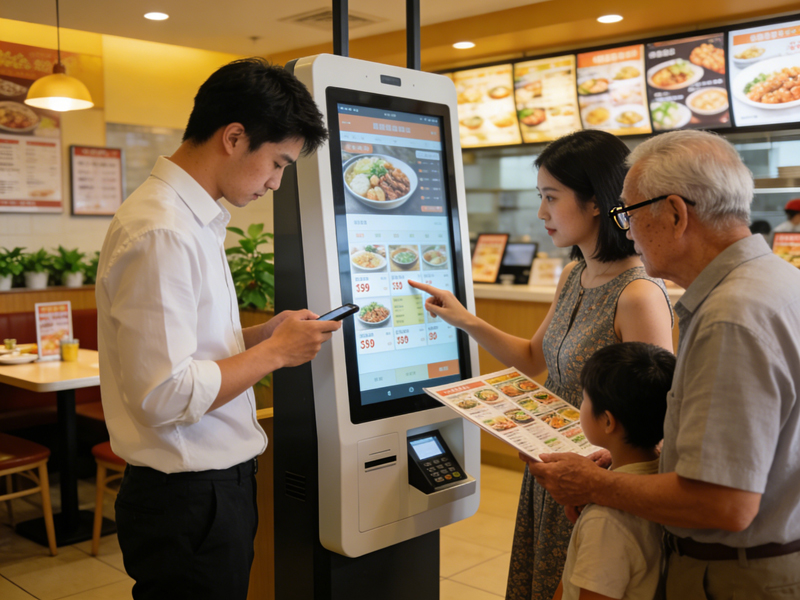
Modern service businesses pursue faster service and smoother daily operations. Store owners look for stable tools to cut peak-hour pressure and reduce human errors. Many business owners adopt smart self-service devices to upgrade their workflow.As a result, kiosks have grown popular across catering, retail and public service spaces. Many people start to worry that these smart devices will take human jobs away.

信息亭

In truth, kiosks do not eliminate workers. 反而, they reshape job content and optimize team work allocation. This article explains why kiosks complement staff, what tasks they handle, and how they change modern service work.

What Daily Tasks Kiosks Take Over in Service Businesses

focus only on repetitive, rule-based work. They handle simple jobs that waste human labor every day.

1. Fast order collection and item recording

Kiosks complete customer order selection and data recording. They follow fixed program rules without fatigue. 因此, they maintain consistent speed during busy hours.

2. Automatic billing and discount calculation

These devices calculate order totals and apply valid promotions. They avoid manual miscalculations that happen with tired staff. They also keep every billing record clear and standard.

3. Independent payment processing and receipt printing

Kiosks support one-stop payment and receipt output. They reduce trivial manual work for on-site teams. 同时, they shorten customer waiting time greatly.

Why Kiosks Can Never Fully Replace Human Workers

Even with strong automation ability, kiosks have obvious limits. Human staff hold irreplaceable core service value.

1. Kiosks cannot solve flexible customer problems

Smart devices only respond to preset instructions. They cannot handle special requests, complaints or personalized exceptions. On the other hand, staff resolve diverse customer issues flexibly.

2. Kiosks lack human emotional service temperature

Service industries need communication and patience. Staff deliver friendly guidance and emotional interaction. Kiosks only provide cold, standardized mechanical operations.

3. Kiosks rely entirely on human maintenance

All kiosks need manual cleaning, system updates and fault checks. Workers ensure stable device operation every day. No kiosk can run independently without human support.

4. 现场操作需要人工监督

Crowded peak hours require on-site guidance and order arrangement. Staff guide new users and maintain store order. Kiosks cannot manage overall store operation.

How Kiosks Optimize Jobs Instead of Replacing Them

Rather than cutting jobs, kiosks push service work to upgrade and become more valuable.

1. 将员工从重复性工作转向核心工作

Workers spend less time on mechanical ordering and billing. They focus on product production, store hygiene and customer experience improvement. Their work becomes more professional.

2. Create new technical job positions

Stores need workers to manage, debug and maintain kiosk systems. These new technical roles enrich job options and improve team professionalism.

3. Reduce staff work pressure and fatigue

Kiosks share high-intensity peak-hour workloads. Staff face less repetitive labor and lower work pressure. This change improves overall job satisfaction.

Core Business Advantages of Kiosk + Staff Cooperation

The combination of kiosks and human staff creates the best modern service model.

1. Balance high efficiency and service quality

Kiosks guarantee fast, error-free standardized service. Staff make up for flexible and humanized service gaps. The two parts cooperate to stabilize store operation.

2. Improve customer satisfaction steadily

Customers choose self-service or manual service freely. They enjoy fast ordering and warm on-site guidance. This flexible mode fits different user habits.

3. Cut long-term operating costs

Kiosks reduce error rates and labor waste. 同时, staff maximize core service value. Businesses gain more stable and sustainable profits.

关于自助服务终端更换工作人员的常见问题解答

Q1: Will kiosks cause job loss in the service industry?

A1: 不. Kiosks only replace repetitive basic labor. They drive job upgrading and create new technical positions instead of reducing total jobs.

Q2: Can stores run fully unmanned with only kiosks?

A2: 不. Kiosks need regular maintenance, cleaning and troubleshooting. Human supervision remains essential for long-term stable operation.

第三季度: 哪些工作只有人类才能完成?

A3: Complex problem handling, 情感沟通, device maintenance and store management all rely on professional staff. Kiosks cannot finish these flexible tasks.

第四季度: Do kiosks make staff work easier?

A4: 是的. Kiosks take over tedious repeated work. Staff focus on high-value service work and feel less tired during peak hours.

Q5: Is the kiosk and staff cooperation model the future trend?

A5: 是的. 这种混合模式平衡了效率和使用温度. It has become the standard development trend for catering and retail industries.

结论

总结一下, kiosks are not replacing workers in modern service industries. They undertake low-value, repetitive mechanical work to ease staff pressure. 此外, they promote job upgrading, 优化劳动力配置,创造新的就业方向. Human staff still dominate flexible service, 情感沟通与设备管理. The perfect combination of kiosks and employees brings efficient, stable and humanized service for all kinds of stores.

If you want to deploy high-stability self-service kiosks to optimize your store labor structure and improve operational efficiency, 请在我们的官方网站上填写咨询表. Share your business type and functional demands, and our team will provide customized kiosk solutions for your project.

提交下面的表格以获取更多信息

或获得个性化优惠.


    *我们尊重您的机密性,所有信息均受到保护