Les systèmes d’énergie solaire sont à l’avant-garde de l’énergie durable, mais un contrôle inefficace des équipements peut nuire aux performances. Cadrans traditionnels, données déconnectées, ou des interfaces fragiles entraînent une perte d’énergie, entretien retardé, et des opportunités d'optimisation manquées. Ces problèmes réduisent la rentabilité des parcs solaires, prolonger les temps d'arrêt, et limiter le plein potentiel des investissements dans les énergies renouvelables. Les écrans HMI industriels pour le contrôle des équipements solaires résolvent ces défis critiques.
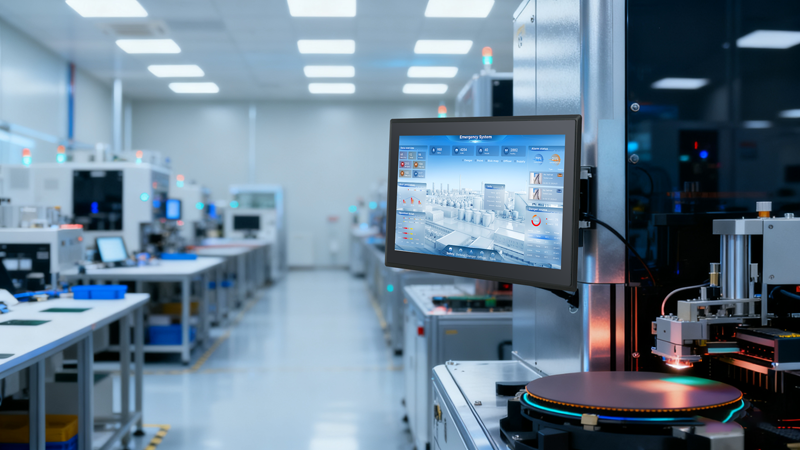
Conçus spécifiquement pour les environnements solaires (des panneaux de toit aux fermes à grande échelle), ces écrans centralisent le contrôle des onduleurs., traqueurs, piles, et capteurs. Ils sont construits pour résister aux conditions météorologiques extrêmes, Exposition aux UV, et un fonctionnement constant, offrant des performances fiables 24/7. Que vous gériez un petit système commercial ou un grand parc solaire, ces écrans HMI industriels transforment les équipements solaires fragmentés en un système coordonné, réseau efficace. Cet article détaille leurs principales caractéristiques, avantages, candidatures, et FAQ pour montrer comment ils révolutionnent la gestion de l'énergie solaire.
Caractéristiques principales des écrans IHM industriels pour le contrôle des équipements solaires
1. Surveillance des performances solaires en temps réel & Contrôle
L'efficacité solaire commence par la visibilité, et ces écrans fournissent des informations exploitables:
Suivi complet des données: Surveiller l'irradiation solaire, sortie de l'onduleur, niveaux de stockage de la batterie, et consommation d'énergie en temps réel.
Contrôle centralisé des équipements: Ajuster les trackers solaires (azimut/inclinaison), paramètres de l'onduleur, et chargement/déchargement de la batterie en un seul clic.
Alertes de performances: Avertissements visuels et sonores pour des problèmes tels que « Faible irradiance,» « Défaut de l'onduleur," ou " Surcharge de la batterie " pour éviter la perte d'énergie.
Tableaux de bord personnalisables: Adaptez les vues de données pour prioriser les KPI (Par exemple, « Production énergétique quotidienne,» « Efficacité du système ») pour les opérateurs ou parties prenantes.
Ce niveau de contrôle garantit qu'aucune énergie n'est gaspillée et que les problèmes sont résolus avant qu'ils n'aient un impact sur les performances..
2. Résistant aux intempéries & Conception robuste de qualité solaire
Les environnements solaires sont difficiles et ces écrans sont conçus pour durer:
Résistance à la poussière et à l'eau IP65/IP67: Les enceintes scellées bloquent la pluie, poussière, et les débris des fermes solaires extérieures ou des installations sur les toits.
Tolérance aux UV et à la température: Résiste à la lumière directe du soleil (Indice UV50+) et températures extrêmes de -30°C à 70°C (-22°F à 158°F), convient aux déserts ou aux climats froids.
Anti-éblouissement, écrans haute luminosité: 1200+ la luminosité lente assure la lisibilité en plein soleil, essentiel pour la surveillance extérieure.
Résistance aux chocs et aux vibrations: Les cadres renforcés supportent les vibrations du vent, impacts de la grêle, et les bosses liées à la maintenance.
3. Intégration transparente avec les systèmes solaires & Logiciel
Ils se connectent à votre infrastructure solaire existante pour éviter les perturbations:
Compatibilité avec les équipements solaires: Fonctionne avec des onduleurs (SMA, Fronius, Huawei), traqueurs (Suivantracker, Technologies de baies), et GTC (Systèmes de gestion de batterie).
Intégration de logiciels solaires: Synchronisez avec les plateformes de surveillance (Surveillance SolarEdge, Enphase Éclairer) et systèmes de gestion de l'énergie (SME) pour une visibilité de bout en bout.
Plusieurs protocoles de communication: Prise en charge Modbus TCP, Ethernet/IP, et MQTT pour un transfert de données stable sur les réseaux solaires.
Connectivité cloud: Transférez les données vers des serveurs cloud pour un accès à distance, analyse historique, et rapports sur les performances.
4. Interface conviviale & Gestion à distance
Les opérations solaires doivent être simples, des outils flexibles - et ces écrans offrent:
Navigation intuitive: Les grandes icônes et les étiquettes claires réduisent le temps de formation, même pour le personnel non technique.
Compatibilité mains gantées: La sensibilité tactile améliorée fonctionne avec des gants de travail, afin que les équipes de maintenance puissent faire fonctionner les écrans sur le terrain.
Capacités d'accès à distance: Surveiller et contrôler les équipements solaires à partir d'appareils hors site (ordinateurs portables, comprimés) via des connexions cloud sécurisées.
Fonctionnalité hors ligne: Stockez les données localement si la connectivité Internet tombe, puis synchronisez automatiquement une fois restauré - critique pour les fermes solaires distantes.
Avantages clés pour les systèmes d’énergie solaire
1. Augmenter la production d’énergie & Efficacité du système
Chaque kilowattheure compte, et ces écrans maximisent le potentiel solaire:
Augmenter le rendement énergétique de 8 à 12 %: Optimisez le positionnement du tracker solaire et les paramètres de l'onduleur en fonction des données d'irradiation en temps réel.
Réduire le gaspillage d’énergie: Empêcher la surcharge/décharge des batteries et ajuster l'équipement pour éviter les modes de fonctionnement à faible efficacité.
Minimisez les temps d’arrêt: La détection rapide des défauts réduit le temps de résolution de 60%, garantir que les systèmes fonctionnent à des performances optimales plus longtemps.
Optimiser l'utilisation du stockage: Équilibrez la charge de la batterie avec la demande du réseau pour maximiser l’autoconsommation et réduire les coûts des services publics.
2. Simplifiez la maintenance & Réduire les coûts
La maintenance solaire est coûteuse : ces écrans simplifient l'entretien:
Alertes de maintenance prédictive: Identifier la dégradation des équipements (Par exemple, « Chute d'efficacité de l'onduleur ») avant que les pannes ne surviennent, réduire les réparations d'urgence.
Réduisez le temps de maintenance de 40%: Les données centralisées et les diagnostics à distance éliminent le besoin d'inspections sur site de chaque composant.
Prolonger la durée de vie des équipements: Contrôles correctement calibrés (Par exemple, alignement du tracker, gestion de la batterie) réduire l'usure des onduleurs et des batteries.
Coûts de main-d'œuvre réduits: La gestion à distance permet aux équipes de surveiller plusieurs sites solaires à partir d'un seul endroit, réduire les frais de déplacement.
3. Améliorer la sécurité & Conformité
Les systèmes solaires nécessitent des normes de sécurité strictes et ces écrans assurent la conformité:
Caractéristiques de sécurité électrique: Les fonctions de verrouillage/étiquetage empêchent l’activation accidentelle de l’équipement pendant la maintenance.
Rapports de conformité: Générer automatiquement des journaux pour les normes réglementaires (Par exemple, CEI 61215 pour panneaux solaires, NEC 690 pour le câblage) pour simplifier les audits.
Protection contre l'incendie et la surchauffe: Les alertes de « surchauffe de l'onduleur » ou d'« emballement thermique de la batterie » réduisent les risques pour la sécurité..
Contrôle d'accès: Restreindre les ajustements du système aux utilisateurs autorisés, assurer la sécurité, fonctionnement conforme.
4. Améliorer le retour sur investissement & Rentabilité du parc solaire
Ces écrans offrent des retours financiers mesurables:
Délais de récupération plus rapides: L'augmentation de la production d'énergie et la réduction des coûts de maintenance raccourcissent les délais de retour sur investissement de 1 à 2 ans..
Prise de décision basée sur les données: Les données historiques sur les performances aident à identifier les panneaux ou les baies sous-performants pour des mises à niveau ciblées..
Factures de services publics réduites: Optimiser l’autoconsommation d’énergie solaire, réduire la dépendance à l’égard du réseau électrique.
Rapports transparents aux parties prenantes: Générez des rapports de performance automatisés pour les investisseurs, utilitaires, ou des incitations gouvernementales.
Applications pratiques pour différentes installations solaires
1. Fermes solaires à grande échelle
Pour les projets solaires à grande échelle (10MO+):
Surveillance multi-matrices: Gérez des centaines d'onduleurs, traqueurs, et batteries à partir d'un seul tableau de bord de salle de contrôle.
Outils d'intégration de réseau: Synchronisez la production d'énergie avec la demande du réseau pour éviter les réductions et maximiser les tarifs de rachat..
Cartographie des données géographiques: Visualisez les performances dans différentes zones de la ferme pour identifier les variations d'irradiation.
2. Commercial & Industriel (C&je) Toits solaires
Pour les entreprises, usines, ou entrepôts:
Gestion des charges: Équilibrez la production solaire avec la consommation d’énergie sur site pour réduire les frais de pointe.
Contrôle du stockage de la batterie: Optimiser l'alimentation de secours pour les opérations critiques pendant les pannes de réseau.
Intégration des factures de services publics: Suivez les économies solaires par rapport aux coûts du réseau pour démontrer le retour sur investissement pour les propriétaires d'entreprise.
3. Systèmes solaires résidentiels (Développements à grande échelle)
Pour les complexes résidentiels ou les communautés résidentielles:
Surveillance du système partagé: Gérez un panneau solaire centralisé et distribuez l'énergie à plusieurs maisons.
Outils de facturation et d'allocation: Suivez la consommation d’énergie par foyer pour un partage équitable des coûts.
Entretien simplifié: Identifiez les problèmes avec des panneaux individuels ou des onduleurs sans perturber l'ensemble du système..
4. Installations solaires hors réseau
Pour les sites éloignés (cabines, tours de télécommunications, communautés rurales):
Optimisation de la gestion de la batterie: Prolongez la durée de vie de la batterie en empêchant les surcharges/décharges excessives dans les systèmes isolés.
Fonctionnement à faible consommation: Les écrans consomment peu d’énergie, idéal pour les configurations hors réseau avec un stockage limité.
Dépannage à distance: Diagnostiquer les problèmes à distance pour réduire les visites coûteuses sur site.
FAQ sur les écrans IHM industriels pour le contrôle des équipements solaires
Q1: Ces écrans fonctionneront-ils avec mes onduleurs et trackers solaires existants ??
A1: Oui. Ils sont compatibles avec toutes les grandes marques d’équipements solaires (SMA, Fronius, Suivantracker) et prend en charge les protocoles standard pour une intégration transparente. Notre équipe vérifie la compatibilité lors de l'installation.
Q2: Quelle est la durabilité des écrans pour les environnements solaires extrêmes (déserts, climats froids)?
A2: Ils sont conçus pour résister aux conditions les plus difficiles de l’énergie solaire : résistance aux intempéries IP67, Protection UV50+, et plage de température de -30°C à 70°C. La plupart des modèles durent 10+ années dans les installations solaires extérieures.
Q3: Puis-je surveiller et contrôler le système à distance?
A3: Absolument. La connectivité cloud vous permet d'accéder au tableau de bord IHM depuis n'importe quel appareil (ordinateur portable, téléphone, comprimé) avec Internet, permettant une surveillance et des ajustements à distance depuis n'importe où.
Q4: Les écrans nécessitent-ils un entretien régulier?
A4: Un entretien minimal est nécessaire. La conception scellée et les composants robustes réduisent l'entretien : il suffit de nettoyer occasionnellement le verre antireflet pour éliminer la poussière ou les débris.. Les outils d'autodiagnostic vous alertent des problèmes potentiels.
Q5: Quelle garantie accompagne les écrans HMI industriels pour utilisation solaire?
A5: Tous les modèles incluent une garantie de 5 ans couvrant les défauts matériels, dommages causés par les intempéries, et réactivité au toucher. Des garanties prolongées de 10 ans sont disponibles pour les parcs solaires à grande échelle, avec 24/7 assistance technique.
Conclusion
Les écrans HMI industriels sont l’épine dorsale d’une, systèmes d'énergie solaire rentables. Ils centralisent le contrôle, maximiser la production d'énergie, et simplifie la maintenance, tout en résistant aux conditions difficiles des environnements solaires. Que vous gériez une ferme à grande échelle, toit commercial, ou installation hors réseau, ces écrans transforment l'équipement solaire en un appareil intelligent, réseau coordonné qui fournit plus d’énergie et des coûts réduits.
Prêt à optimiser votre système solaire avec les écrans HMI industriels? Remplissez le formulaire sur notre site Web pour entrer en contact avec nos experts en technologies des énergies renouvelables. Nous évaluerons votre installation solaire, vérifier la compatibilité des équipements, et recommandez une solution personnalisée pour augmenter votre production d'énergie et votre retour sur investissement. Libérons tout le potentiel de votre investissement solaire – commencez dès aujourd’hui!