
Component traceability is non-negotiable for modern manufacturing, from automotive and aerospace to medical devices and electronics. It requires end-to-end visibility of every component—from raw material sourcing and production to assembly and delivery. Yet outdated tracking interfaces often create gaps: slow data entry delays updates, manual logs are prone to errors, and disconnected systems break traceability chains. These flaws lead to compliance violations, costly recalls, and lost trust from customers—especially in regulated industries.
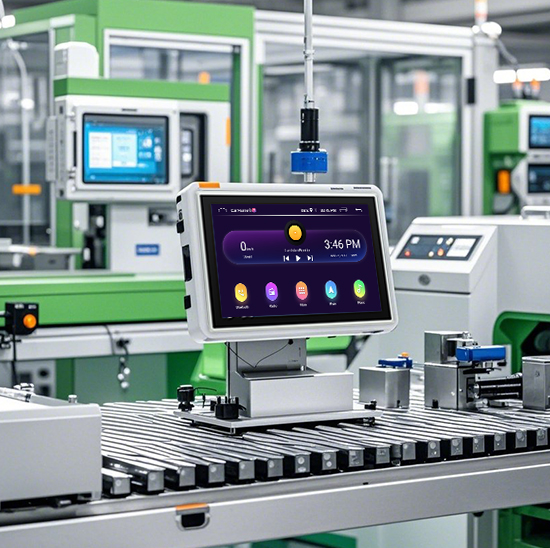
Industrial Touchscreen Panels are the backbone of seamless component traceability, merging intuitive data capture with industrial-grade reliability. Designed for manufacturing floors, these panels let operators scan component barcodes/QR codes, log real-time data, and sync with traceability software—all with a few taps. They withstand harsh factory conditions, support multi-user access, and ensure data accuracy, making them indispensable for facilities prioritizing transparency and compliance. This article breaks down their core features, benefits, applications, and FAQs to show how they revolutionize component traceability.
Core Features of Industrial Touchscreen Panels for Component Traceability
1. Seamless Barcode/QR Code Scanning & Data Capture
Fast, accurate component identification to kickstart traceability:
Built-in scanner compatibility: Integrates with 1D/2D scanners to read component barcodes, serial numbers, and batch IDs instantly.
Touch-to-scan functionality: Operators tap the screen to initiate scans, reducing time spent on manual data entry.
Offline data storage: Saves scans and logs when internet connectivity drops, syncing automatically once back online.
Error-proof data validation: Flags invalid scans (missing codes, duplicate entries) to prevent traceability gaps.
This feature ensures every component is accurately identified and logged from the moment it enters the facility.
2. Real-Time Data Sync & Traceability System Integration
Ensures traceability data is always up-to-date across all systems:
Compatibility with traceability software: Syncs seamlessly with MES (Manufacturing Execution Systems), ERP, and WMS platforms (SAP, Oracle, Siemens).
Real-time data updates: Logs component movements, assembly steps, and quality checks instantly, updating traceability records in real time.
Centralized data access: Displays complete component histories (sourcing, production, inspections) on a single screen for quick reference.
Remote data access: Lets supervisors view traceability data from off-site control rooms, enabling proactive oversight.
This integration eliminates data silos and ensures a continuous traceability chain.
3. Industrial-Grade Durability & Factory Resistance
Built to perform in harsh manufacturing environments:
IP65 front-panel protection: Sealed against dust, debris, and liquid spills (coolants, cleaning agents) common on factory floors.
9H tempered glass surface: Resists scratches from tools, components, and accidental impacts during busy shifts.
Wide temperature tolerance: Operates reliably from -20°C to 60°C (-4°F to 140°F), fitting extreme factory conditions.
Anti-glare high-brightness display: 1,000 nits brightness with anti-reflective coating ensures visibility under factory lighting.
This durability guarantees 24/7 operation with minimal maintenance, even in high-throughput facilities.
4. Customizable Traceability Workflows & User-Friendly Design
Tailored to the unique traceability needs of different industries:
Customizable data fields: Lets facilities add industry-specific fields (material certifications, inspection results, supplier info).
Intuitive icon-based UI: Simple menus (“Scan Component,” “Log Movement,” “View History”) reduce training time for operators.
Multi-user access control: Assigns role-based permissions (operators, supervisors, auditors) to protect sensitive traceability data.
Batch processing: Logs multiple components at once, ideal for high-volume production lines.
This flexibility ensures the panels adapt to diverse traceability requirements, from small batches to mass production.
5. Data Security & Compliance Documentation
Protects traceability data and simplifies audit preparation:
Data encryption: Secures component records and user activity, complying with GDPR, HIPAA, and ISO standards.
Automated audit trails: Logs every action (scans, edits, deletions) with timestamps and user IDs for full accountability.
Exportable reports: Generates traceability reports (batch histories, component movements) in PDF/Excel for audits.
Long-term data retention: Stores traceability data for years, meeting industry-specific retention requirements.
This feature ensures facilities stay compliant and ready for regulatory audits.
Key Benefits of Industrial Touchscreen Panels for Component Traceability
1. Improve Traceability Accuracy & Eliminate Errors
Reduces human error to ensure reliable component tracking:
Cut data entry errors by 60%: Automated scanning replaces manual logging, eliminating typos and missed entries.
Prevent traceability gaps: Error-proof validation ensures every component is properly identified and tracked.
Ensure data consistency: Real-time sync ensures all systems have the same up-to-date traceability information.
Simplify root cause analysis: Complete component histories help identify issues (e.g., defective batches) quickly.
2. Streamline Operations & Boost Productivity
Faster data capture and workflows save time for operators and supervisors:
Reduce scanning/logging time by 40%: Touch-to-scan functionality and batch processing speed up traceability tasks.
Simplify operator training: Intuitive UI cuts onboarding time, letting new staff contribute quickly.
Free up supervisor time: Remote access and automated reports eliminate manual oversight of traceability tasks.
Minimize downtime: Offline data storage ensures traceability continues even during connectivity issues.
3. Ensure Regulatory Compliance & Avoid Penalties
Keeps facilities compliant with strict industry regulations:
Meet global standards: Supports compliance with ISO 9001, IATF 16949 (automotive), FDA (medical), and AS9100 (aerospace).
Simplify audit preparation: Automated reports and audit trails reduce the time spent preparing for audits.
Avoid costly penalties: Accurate traceability prevents compliance violations and fines from regulatory bodies.
Support product recalls: Fast access to component histories lets facilities target recalls precisely, reducing costs.
4. Enhance Transparency & Build Customer Trust
Complete traceability visibility strengthens relationships with customers and stakeholders:
Provide customer documentation: Share component traceability reports with customers to prove quality and compliance.
Boost brand reputation: Reliable traceability shows a commitment to quality and accountability.
Enable supplier transparency: Track component sourcing to ensure suppliers meet quality standards.
Improve inventory management: Real-time component tracking helps optimize inventory levels and reduce waste.
Practical Applications for Different Industry Scenarios
1. Automotive Component Traceability
For tracking automotive parts (engines, sensors, electronics) through production:
Scan component serial numbers to link parts to specific vehicles and production batches.
Log assembly steps and quality checks to ensure compliance with IATF 16949.
Support recall management by quickly identifying affected vehicles and components.
2. Medical Device Component Traceability
For tracking sterile medical components (implants, sensors, surgical tools):
Ensure FDA compliance with detailed traceability records for every medical component.
Log sterilization cycles and inspection results to maintain product safety.
Provide full batch traceability for regulatory audits and patient safety.
3. Aerospace & Defense Component Traceability
For tracking mission-critical aerospace components (avionics, structural parts):
Meet AS9100 standards with long-term data retention and detailed audit trails.
Track component sourcing to ensure compliance with defense industry requirements.
Log environmental testing and performance data for component reliability.
4. Electronics Component Traceability
For tracking microchips, PCBs, and electronic parts through manufacturing:
Scan tiny component barcodes (01005 size) with high-precision scanners integrated with the touchscreen.
Log soldering, testing, and assembly steps to ensure product quality.
Support RoHS compliance by tracking material composition of electronic components.
FAQs About Industrial Touchscreen Panels for Component Traceability
Q1: Will these panels integrate with our existing traceability software?
A1: Yes! They support all standard industrial protocols and integrate seamlessly with leading MES, ERP, and WMS platforms. Our team verifies compatibility and provides smooth setup.
Q2: Can operators use the panels with gloves on the factory floor?
A2: Absolutely. The touchscreens are optimized for use with industrial gloves (latex, nitrile, work gloves), ensuring full functionality without removing handwear.
Q3: How long do the panels store traceability data offline?
A3: They can store data offline for up to 30 days, depending on usage. Once reconnected to the internet, all offline data syncs automatically to your traceability system.
Q4: Can we customize the data fields to match our industry’s needs?
A4: Yes. We offer fully customizable data fields to add industry-specific information (e.g., material certifications, supplier IDs, inspection results).
Q5: What warranty and support are included for manufacturing applications?
A5: All models include a 3-year warranty covering hardware defects, touch responsiveness, and durability. Extended 5-year warranties are available, with 24/7 technical support.
Conclusion
Industrial Touchscreen Panels are indispensable for modern component traceability, merging accuracy, durability, and efficiency to streamline tracking and ensure compliance. They eliminate errors, speed up workflows, and provide complete visibility of every component—critical for regulated industries like automotive, medical, and aerospace. Whether you’re tracking small electronic parts or large aerospace components, these panels deliver the reliability and functionality needed to maintain a seamless traceability chain.
Ready to optimize your component traceability with Industrial Touchscreen Panels? Fill out the form on our website to connect with our industrial technology experts. We’ll assess your facility’s needs, verify software compatibility, and recommend a customized solution to boost accuracy and compliance. Let’s build a more transparent, efficient manufacturing process—start today!